The license plate didn’t match the car, Simmons didn’t have a driver’s license, and — far worse — he was in possession of 64 packets of crack cocaine wrapped up into a small ball.
What could have been a victory for law enforcement — Simmons has an extensive record for dealing — resulted in a missed opportunity because of the way Klink retrieved the drugs. While patting Simmons down on the street, the officer reached into the suspect’s underwear and took the cocaine packets from between his buttocks.
“The problem is, you can’t help yourself to them out on the street corner,” Simmons’ attorney, Shaka Johnson, said in a recent interview. “This is not Mad Max Beyond Thunderdome.”
Simmons’ case shows how an illegal search can come back to haunt the Police Department in court. It also shines a light on an illegal practice that some court officials say is racially driven: Philadelphia police officers searching the underwear of black men during traffic and pedestrian stops.
Stories of having pants undone and lowered, and underwear being rifled through, come from black men from various parts of the city. Their stories are strikingly similar. Sometimes drugs are found, sometimes not.
Such searches, conducted in public places, are strictly prohibited by Police Department policy and state law. The department keeps no statistics on how often these searches occur, a department spokesman said. Commissioner Richard Ross says he has no knowledge of the practice.
But five men who have had their underwear searched on public streets say the experiences left them scarred.
Call it Stop-and-Fondle.
In interviews, six Philadelphia defense attorneys decried the practice, some saying it is so common that many of their clients believe it to be legal. “From my experience, representing hundreds of clients, it is routine,” said attorney Michael Diamondstein. “It’s almost like clients don’t bring it up anymore. … The problem is, no one is worried about it until it happens to them. It’s not always a bad guy. A lot of times it’s just people of color or people that live in the lower-income neighborhoods.”
Berto Elmore, another Philadelphia defense attorney, likened the searches to emasculating tactics used during slavery by masters:
“You have young people who have an imagery of being tough, and when you’re able to degrade them that publicly, it lets them know, ‘We’re the tough guys, not you. Look what we can do to you.’ ”
Added David Rudovsky, who along with the ACLU sued the city in 2011 over its stop-and-frisk policy:
“It’s completely impermissible as part of stop-and-frisk. You can’t even go into someone’s pocket, much less his underwear.”
On the afternoon of May 8, Monte Singleton dropped off his 6-year-old daughter, Heaven, at her grandmother’s and was nearly home at 55th and Catherine Streets when a police SUV pulled over his 2012 Chrysler 300. An officer ordered him out and said he’d been stopped because his back window was tinted.
For reasons not explained, an officer searched him — first over his clothes, then in his underwear — said the used-car salesman, who wears a picture of his daughter around his neck.
An officer next sat him in the back seat of the police SUV while another officer searched his car, tossing its contents, including his daughter’s clothing, on the sidewalk, said Singleton, who said he gave no consent for a search.
Singleton, who has filed a complaint with Internal Affairs, said police in West Philadelphia’s 18th District have searched his underwear repeatedly.
“They’re out here, basically, going around sexually harassing people. They’re doing what they want,” said Singleton, who received probation in 2009 and 2011 for drug-related charges, court records show.
“Certain officers try to be sneaky about it, but then you got some officers who just don’t care … who sees them doing it,” he added.
Nafiys Walters, 32, hung his head in a Logan pizza parlor as he recalled the last time officers searched his underwear in 2010: “They were rough. They … threw me on the ground. It was like damn near being raped. They did what they wanted with me.” Walters said he was also beaten and put in jail overnight — he suspects for protesting being searched.
It started, he said, when two white male officers drove alongside him as he pedaled a bicycle on 21st Street near McKean Street in South Philadelphia. They shouted for him to pull over and accused him of going through a red light.
Walters was on his way to the dry cleaners to pick up the suit he was to wear to his graduation the next day from Cheyney University. After his release from jail, he was only able to catch the last 10 minutes of the ceremony. He missed the commencement speech by then-Mayor Michael A. Nutter, who at the time was drawing the ire of many African Americans and others for his support of the Police Department’s stop-and-frisk policy.
“How about that irony,” said Walters, who saw a marijuana-possession charge against him be dropped, according to court records. He denied having marijuana. A police report of the arrest notes that the officers patted him down for their safety but does not mention a search of his underwear.
“I worked my whole life to get to this point, and it almost got taken from me,” said Walters, a married father of five who is a behavioral health worker at Lowell Elementary School in North Philadelphia. “I’m still literally hurt by this.”
No reliable records are kept of underwear searches. Capt. Sekou Kinebrew, the Police Department’s spokesman, said he knows of no such complaints, and urged those who had been searched to come forward. “If that happened and they were violated in any sort of way, they should make a complaint,” he said. “It certainly will be diligently investigated.”
Rochelle Bilal, president of the Guardian Civic League, the local chapter of the National Black Police Association, was also unaware of the practice of searching underwear, but was not surprised.
There’s a reason most of those searched in this way don’t complain, said Johnson, Simmons’ attorney: “It’s not a popular sentiment to say, ‘I could not keep another man from going into my underwear or into my drawers.’ ”
Johnson, a former Atlanta police officer, speculated that the department would not tolerate such searches if they were being conducted outside of predominantly African American communities. “They’re not going into boys’ drawers and behinds in Manayunk when people are coming out of bars,” he said. “You’re not in Roxborough carrying on like this. It’s not up on Welsh Road. You can’t take this conduct to certain zip codes. This whole notion of playing with young black boys’ genitalia seems to be a method of policing, albeit not sanctioned by written policy.”
Seven pages of Police Department policy lay out the rules for strip- and body-cavity searches. Neither type can be made solely for traffic violations or investigatory stops, the directives state.
Strip searches – the removal or rearrangement of clothing to permit the visual inspection of someone’s undergarments and private areas — may only be conducted in a police or medical building or other secure facility after a suspect has been arrested, the arresting officer has reasonable suspicion that the individual has a weapon or contraband and the highest-ranking district or unit supervisor authorizes the search in writing, the policy states.
Body cavity searches — the actual entering or touching of a person’s private areas to search for weapons, evidence or contraband — can only be conducted in a medical facility by a licensed physician after an individual has been arrested and a warrant outlines the probable cause for the search, the policy states.
Brian Henderson, 25, of East Germantown, estimates that since he was 16, Philadelphia officers have reached into his underwear during street searches seven times. The searches have resulted in no arrests, said Henderson, who recently left a U.S. Postal Service job in anticipation of returning to college and moving to California.
The last time he was searched was the spring of 2015 at the Lonnie Young Rec Center in Germantown, Henderson said.
“I was just sitting on the benches watching the kids play a pickup game,” he recalled, when about six bicycle officers rolled onto the basketball court and announced they were looking for firearms due to a rash of shootings in the area.
“Everybody that was sitting on the bench, they told us to stand. They told us to unbuckle our belts. They went ahead and checked underneath my private parts and they checked the back, by my behind. He put his hand in there and lifted up my private parts,” Henderson said.
He said about eight young men were checked that afternoon but none were arrested. The police action was upsetting but was not a surprise, he said.
“I been living in the neighborhood my whole life, so I know the protocol. But being as though I never had a criminal history or anything, I was kind of upset. It was degrading. I wasn’t doing anything wrong.… I was literally sitting there watching the kids play basketball.”
Bradley Bridge is one of several defense lawyers who contend the Police Department doesn’t appear in a hurry to crack down on illegal underwear searches.
“Not infrequently, our clients have complained about inappropriate touching or actions of police during a search,” said Bridge, an assistant public defender in Philadelphia. “Such actions violate the police directive regarding strip searches, not to mention due process and good taste.”
See what the local and national media are saying about Michael Diamondstein and his cases.
Baltimore Ravens running back Ray Rice will be allowed to enter a program to avoid prosecution in an alleged assault of his now-wife. Upon successful completion of the program — which will be a minimum of one year — the third-degree charge of aggravated assault causing serious bodily injury would be dismissed. The arrest would remain on his record, but with no conviction.We were concerned that Mr. Rice would be treated more harshly because of his celebrity status. We are thankful that he was not. We are thankful that he was given the same treatment as anyone else in a similar situation.
- Michael J. Diamondstein
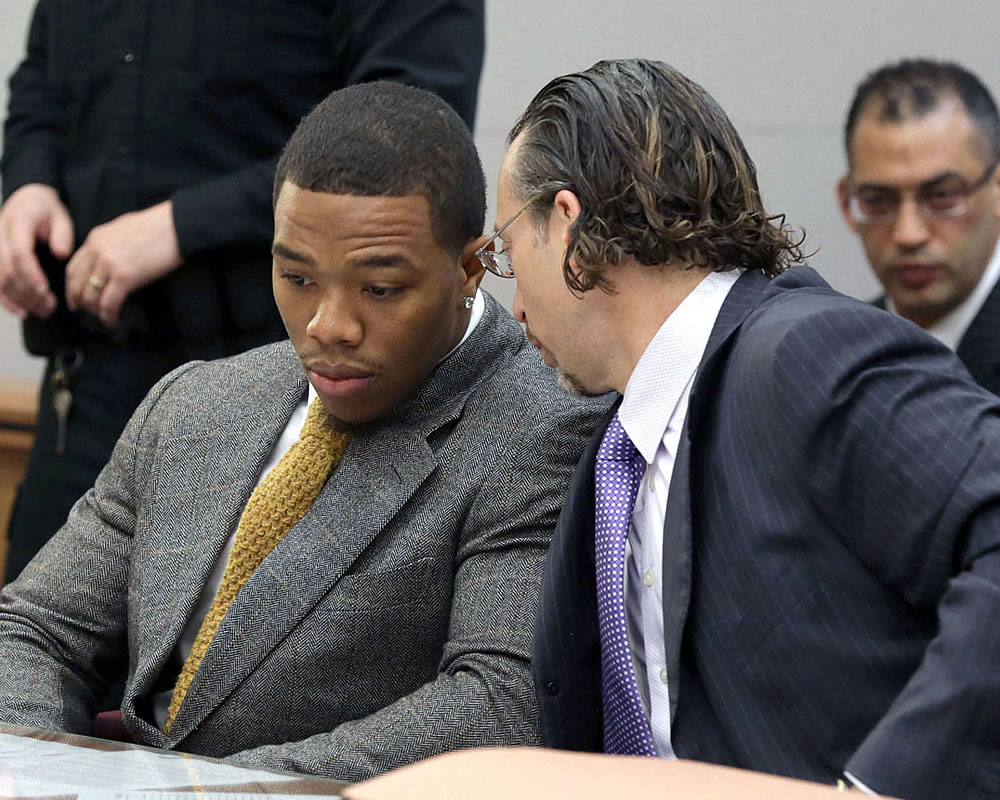
John Gallagher, founder of Gallagher Law in Philadelphia, has been indicted in federal court alongside other executives associated with aerospace startup Theia Group Inc. The indictment alleges involvement in a scheme where Theia falsely claimed plans to launch over 100 satellites for global surveillance, raising more than $250 million through fraudulent means. Gallagher, who served on Theia's board and as an executive vice president, is specifically accused of aiding founder Erlend Olson in financial misconduct and tax evasion activities. Gallagher, who specializes in space and satellite technology law, denies wrongdoing and intends to vigorously defend against these charges.“He [Gallagher] is a patriot, and we intend to vigorously defend his good name.”
- Michael Diamondstein

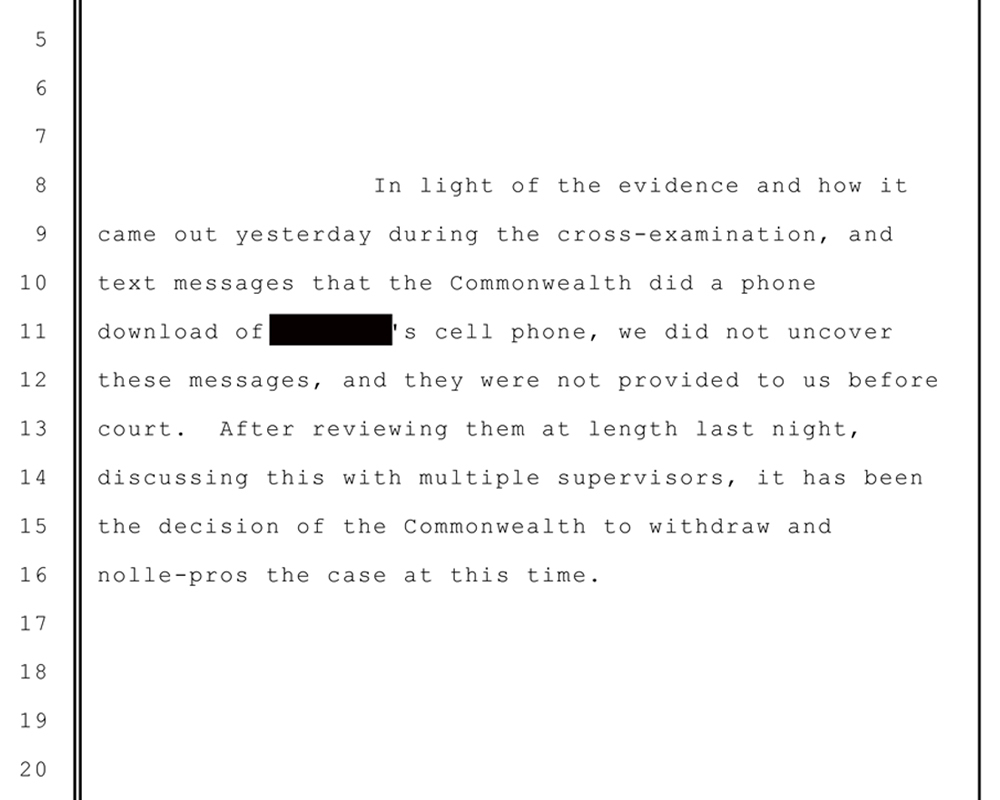
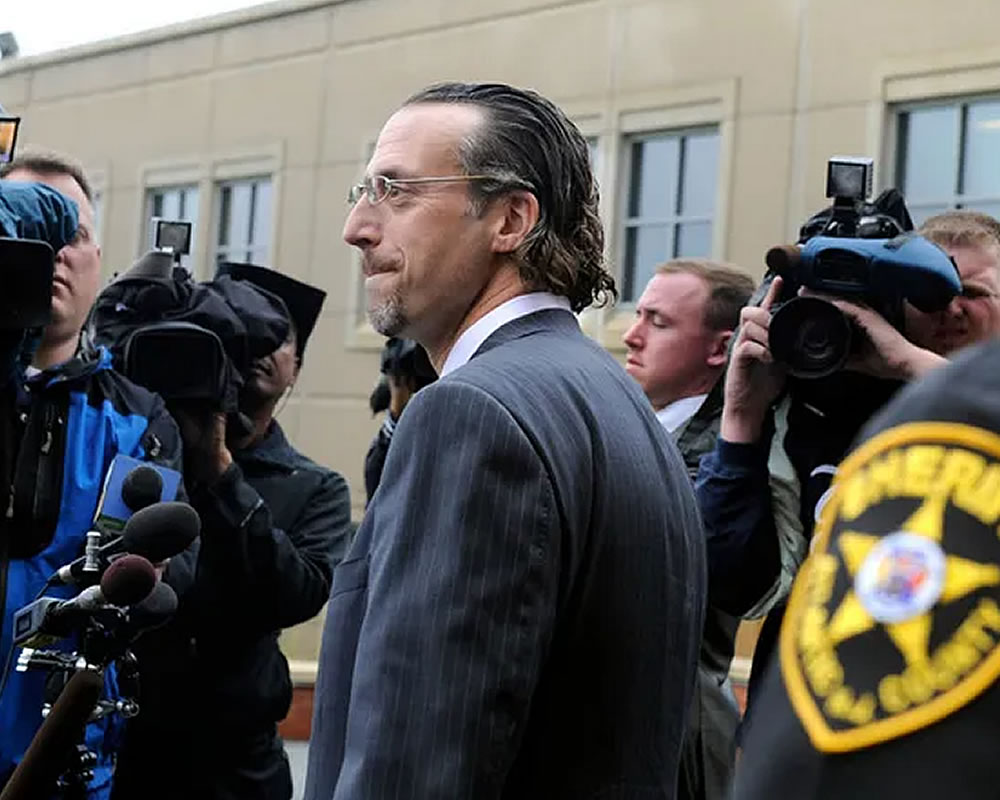
DT had spent three years in jail and was facing lifetimes more for multiple counts of child rape in Pennsylvania and Maryland. But Michael Diamondstein’s thorough investigation and strategic cross-examination forced prosecutors to withdraw their case mid-jury trial.“Michael Diamondstein is the best lawyer on Earth. He saved my life.”
- DT
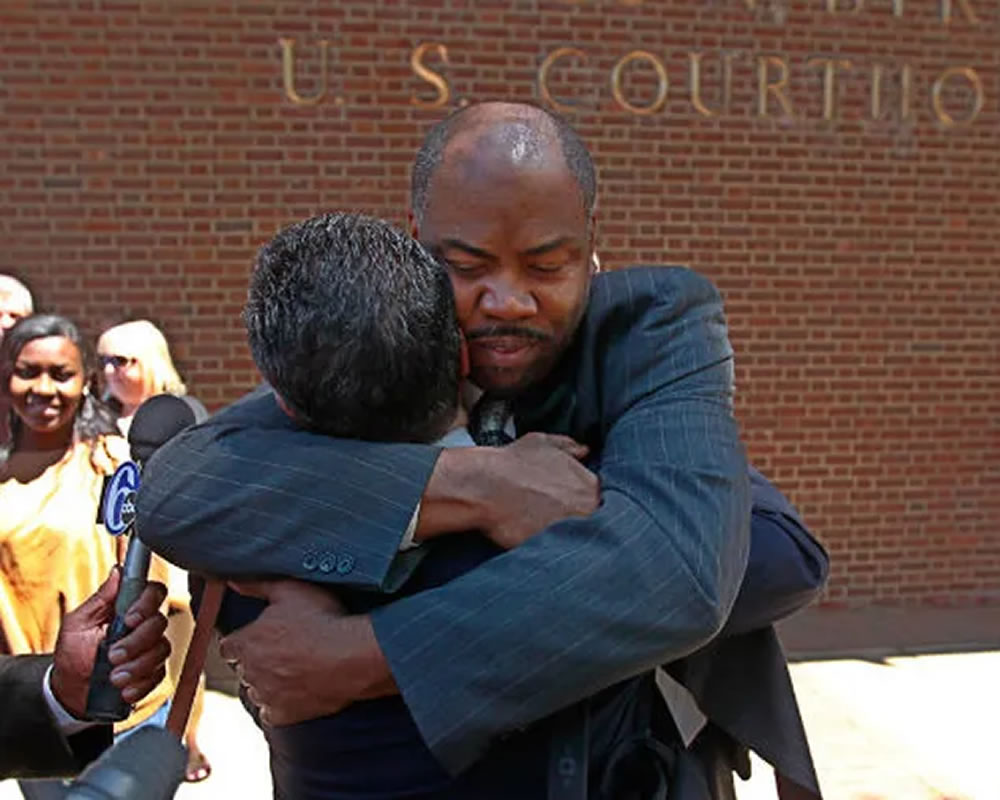
Mark Young had been serving a life sentence for what prosecutors say was his role as a coconspirator in a 1974 bar robbery that ended in the shooting death of a patron. The 67-year-old Young, who maintained his innocence for almost 50 years, is now slated to be released from prison after a negotiated guilty plea. The judge vacated Young’s previous conviction and sentence.“The district attorney recognized the inequities in the case and we are thankful for the compassion and justice they decided was appropriate.”
- Michael Diamondstein
Willie Stokes's release comes after the U.S. District Court for the Eastern District of Pennsylvania vacated his murder conviction, concluding that the state violated Stokes's constitutional rights by "withholding" crucial evidence about the false testimony of a key witness in the case, according to court documents.He took his first free breaths this afternoon after almost 40 years, and he is very happy and humbled.
- Michael J. Diamondstein
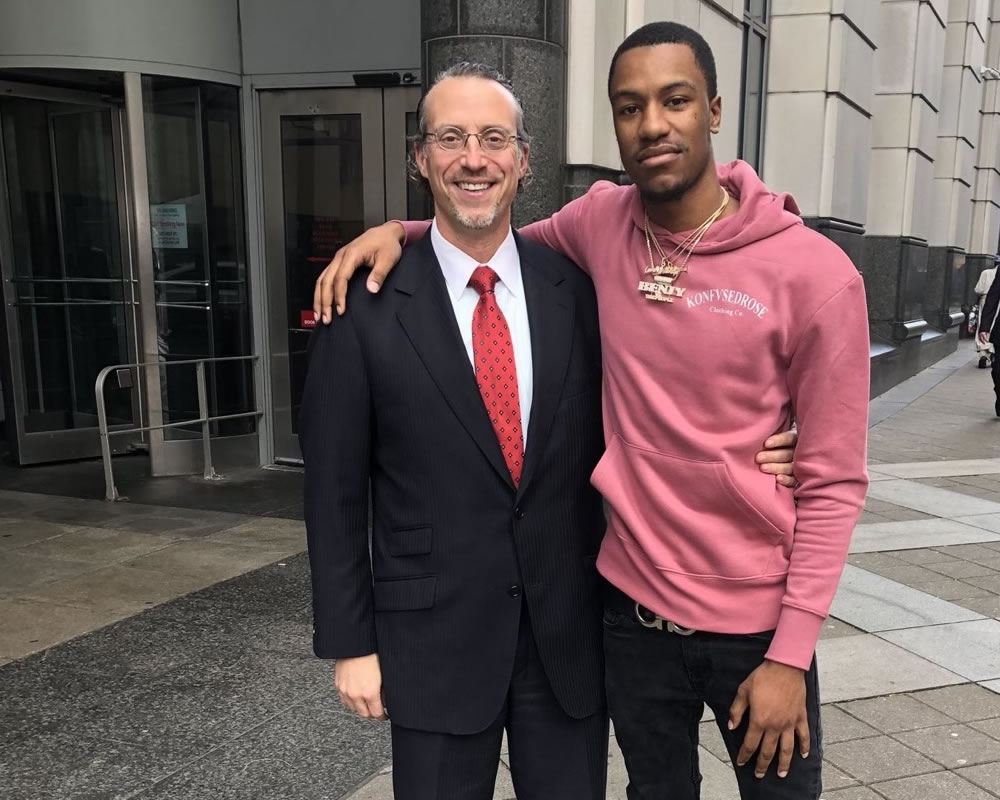
Despite that fact that multiple videos showed local rap singer, Monte Small Atwell aka Benjy killing the decedent, a Philadelphia jury found Mr. Atwell Not Guilty of Murder. The video clearly showed that the unarmed decedent was chasing Mr. Atwell. Mr. Atwell’s attorney, Michael Diamondstein litigated a very effective self-defense case. After a number of withering cross examinations and a closing wherein Mr. Diamondstein exhorted the jurors that his client “would rather be judged by 12 than carried by 6” the jury agreed that Mr. Atwell’s actions were justified.Mr. Diamondstein saved my life. He is the best there is.
- Monte Small Atwell aka Benjy
Six members of an elite Philadelphia narcotics squad were acquitted of federal corruption charges – a verdict the men described as “vindication” after nearly a decade of federal scrutiny surrounding their conduct. A jury of six men and six women took 5 1/2 days to reject prosecutors’ arguments that former Officers Thomas Liciardello, Brian Reynolds, Michael Spicer, Perry Betts, Linwood Norman, and John Speiser routinely beat and robbed drug suspects during their time as members of the Narcotics Field Unit.The things that were said about these honorable men and police officers over the last eight to 10 months were ridiculous. A lot of people in this city owe these heroes an apology.
- Michael J. Diamondstein
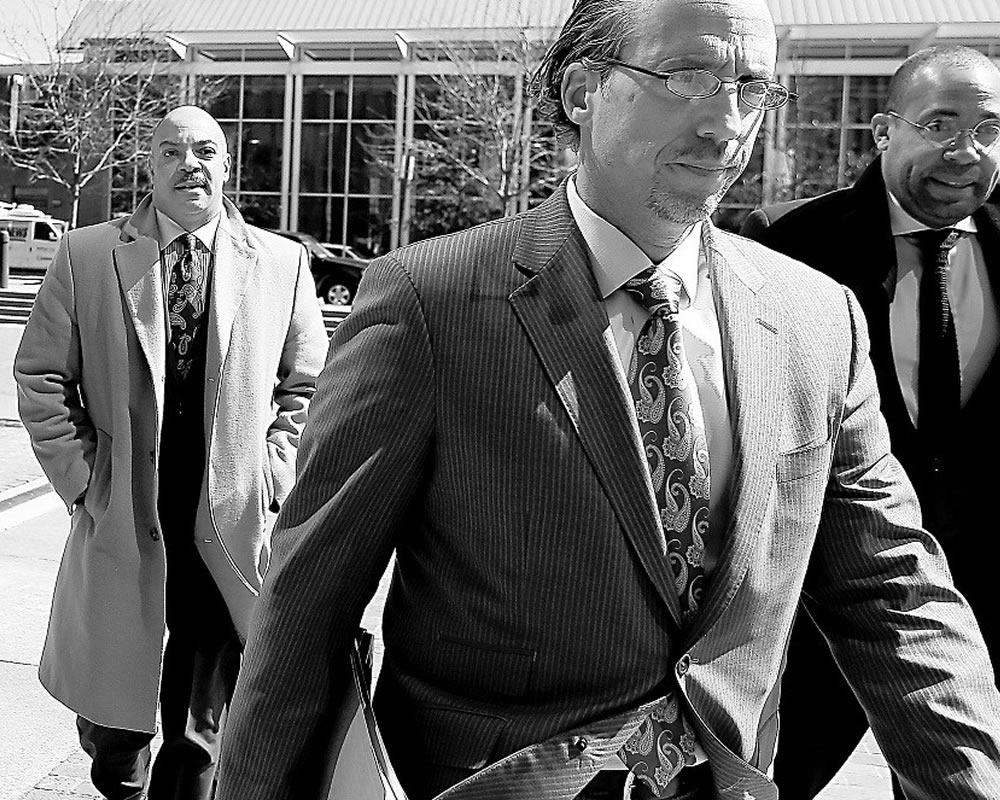
Philadelphia District Attorney Seth Williams pleaded not guilty to 23 counts of fraud, extortion, and bribery-related charges. But the problems of the city’s cash-strapped top prosecutor continued to mount outside the courtroom, a day after federal authorities accused him of repeatedly selling his influence to wealthy benefactors willing to bankroll his luxury tastes.This indictment is 24 hours old and yet too many politicians and commentators have already tried and convicted Seth Williams in the media. Simply because the government makes explosive allegations in a complaint doesn’t mean they’re going to prove it in a court of law.
- Michael J. Diamondstein
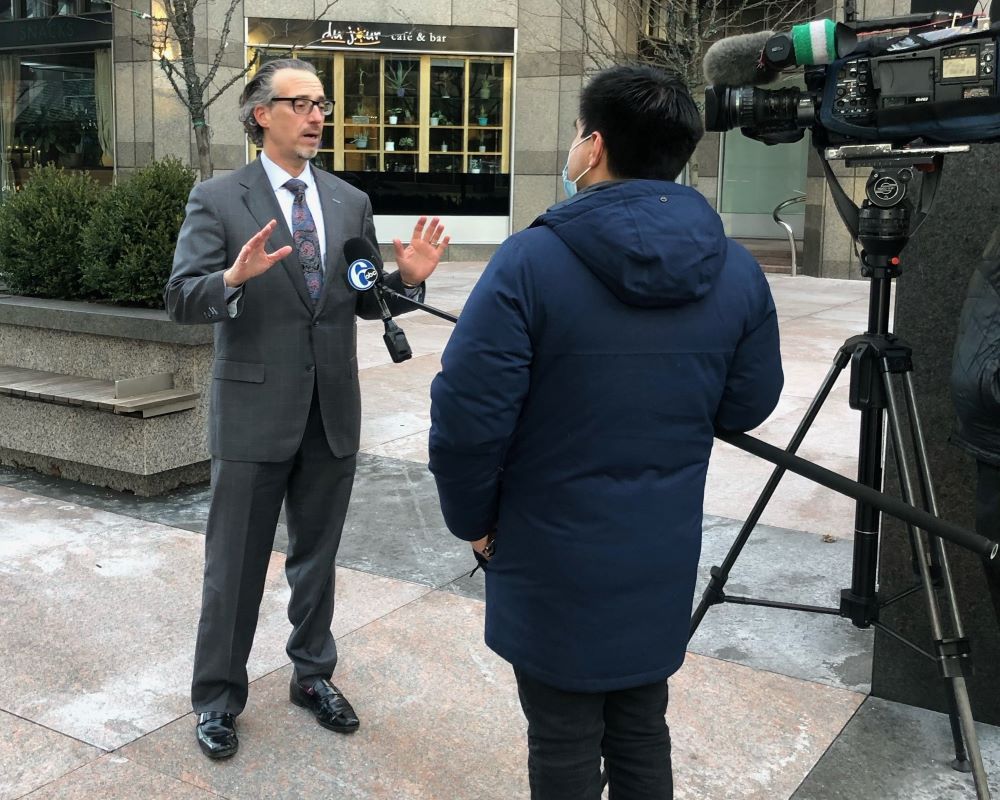
It's 8:00 on a September morning but Michael Diamonstein has already been in his office for hours. A criminal defense lawyer, Diamondstein likes to be prepared before he goes to court. That preparation paid off to get an innocent man cleared of all charges.The man gave me my life back.
- Yusef Bey
With evidence missing and the investigation tainted by the involvement of a detective who pleaded guilty to impeding justice, the District Attorney’s Office has withdrawn murder charges against a 28-year-old man, Dante Hill, in a 2011 shooting outside a North Philadelphia sports bar.Tremendous day, not only for Mr. Hill but for the entire Philadelphia justice system.
- Michael J. Diamondstein
Michael Diamondstein argued the original jail sentence is illegal because the previous judge assigned the case failed to address if Risoldi was eligible for re-entry, which would allow her to be released from jail early.Diamondstein added that Berks County Senior Judge Stephen Lieberman, who is now overseeing the case, has authority to reconsider the sentence made by the previous judge, who retired last year.