Jose Javier Rivera Bernard faces what’s become a common Covid-19 dilemma in the criminal justice system, as he sits in New York’s coronavirus-stricken Metropolitan Correctional Center, facing federal drug charges with no end to his case in sight.
His lawyer, Mark I. Cohen, thinks he has a winning Fourth Amendment argument that could get the evidence tossed out. But due to pandemic restrictions, Rivera Bernard must either agree to a virtual suppression hearing, where Cohen can’t properly challenge the credibility of government witnesses, or languish in lock-up, as the virus keeps ripping through U.S. prisons and jails.
“Even if he loses the hearing, he’s still a human being,” Cohen said.
Like Rivera Bernard, everyone in the system—whether defendants and their attorneys, prosecutors, victims, judges, or jailers—faces bad options due to the pandemic.
Lawyers are navigating a host of issues, from not being able to confer adequately with their clients to potentially skewed jury pools—assuming regular trials ever resume. Judges are routinely delaying cases, buying time like all government officials confronting an evolving situation and novel questions.
Courts have taken a patchwork approach on how to keep the system running, meting out different measures of justice for different defendants, lawyers said.
Though some defendants have been released or obtained more favorable plea deals due to the pandemic, defense attorneys say too many remain in custody with both their health and their rights at risk.
“Courts are overwhelmed and they don’t know how to react,” said Philadelphia lawyer Michael Diamondstein. “The tried and true method is ‘keep everyone in jail and we’ll sort it out.’”
Meanwhile, prosecutors face their own challenges, including dealing with crime victims who are also waiting for their days in court.
“Prosecutors represent all the citizens and public safety should not be ignored or easily dismissed,” said National District Attorney Association president Nancy Parr in an email. “We all want things to return to normal and we are working to get to a new normal where everyone’s rights (the victim’s and the defendant’s) are protected.”
Judges have issued blanket orders suspending speedy trial requirements. Some of the system’s pandemic problems flow from there.
“Most of our efforts for detained clients is trying to get them out, working day and night filing bail applications and compassionate release applications,” said David Patton, executive director and attorney-in-chief of the Federal Defenders of New York.
“Trial or no trial,” he said, “the conditions at our local detention facilities are just horrific right now.”
Defenders have grown restless on the other end of the country, too.
Los Angeles County’s public defender, Ricardo García, said courts are “kicking the can down the road while my clients languish in jail.” He said he’s “at the point where, if the courts ask for an additional extension, I would not be in favor of that.”
Parr said many localities have responded to the pandemic by suspending weekend jail sentences, increasing home electronic monitoring when appropriate, and delaying the start of jail sentences.
She said “there are many circumstances that have to be considered when prosecutors agree or oppose a bond during a hearing,” including the nature of the charges, the facts of the case, the defendant’s criminal record, victims’ input, and the likelihood of the defendant appearing for trial.
Lawyers are having a tough time explaining to clients sitting in jail when they might get in front of a judge and jury.
“Imagine you’re innocent and can’t make bail, and there’s nothing to look forward to,” said Diamondstein, a former Philadelphia prosecutor. “You’re sitting there, and your lawyer is trying to explain to you how this is fair. I can’t do it.”
Cohen said he can’t communicate adequately with Rivera Bernard. The best he can do is order a phone call 72 hours in advance and see him by video for an hour once a week. “The guy just sits. It’s a mess,” Cohen said.
That’s not a unique situation these days, as lawyers across the U.S. face the challenge of preparing for cases and building rapport with clients.
“There is no way you can have a relationship with a client, especially if you didn’t have a strong relationship beforehand and it’s a relatively new client, or you have to make really important decisions and you’re talking to them over a phone or a video camera where you can’t review documents with them or explain evidence,” said National Association of Criminal Defense Lawyers President Nina Ginsberg.
It was hard enough to maintain an attorney-client relationship before, Diamondstein said, “but you can’t start one now. If you’re accused of a crime, you’re in a foreign environment, you’re yanked off the street, you’re thrown into a cell, and they give you a voice on the end of a phone, you’re supposed to put all of your trust into a voice on the end of the phone?”
New York’s Patton added that defenders are also hobbled in conducting their own investigations during the pandemic. “It’s not like we can go knock on people’s doors right now, or canvass street corners and approach people in the way that we would ordinarily,” he said.
Even if trials become the pandemic-era norm, they’ll be very different. Masked witnesses, jury issues, the health of everyone in court, and issues as mundane as figuring out how to confer with clients six feet away are among the myriad puzzles the legal system will have to solve.
A threshold issue is jury composition, Patton said, particularly since no one knows how the pandemic may skew responses to jury summons.
“It’s entirely possible that will skew in ways that are more favorable to the government, not to mention concerns about how they will feel about serving and how that will impact their views of the trial,” he said. “Will they be angry about having to serve? Nervous? Scared? How will that impact their decision?”
Defendants have the right to a jury from a fair cross-section of the community, noted NACDL’s Ginsberg, a founding partner of DiMuro Ginsberg in Alexandria, Va.
But potential jurors being excused for coronavirus reasons “will result in a very limited self-selected pool.” That means the people most excluded from juries will be “the people most affected by Covid: People of color, low income.”
Communication problems continue in the courtroom as well, concerns that affect defense lawyers and prosecutors alike.
“How do you have a confidential communication with your client if you can’t get within six feet of them?” asked Branden Bell, who practices in federal courts in Kansas and western Missouri. The situation “creates a strong tendency to ignore the six-foot rule and just talk to your client,” he said.
Manhattan federal courts are using closed-circuit phone systems, which allow a lawyer and client to sit on opposite sides of the table and whisper into their respective phones.
Beyond the lawyer’s table, there’s the question of how to get the truth out from behind a mask.
It’s enough of a problem for Rivera Bernard’s attorney, Cohen, a former New York prosecutor, to say that a virtual hearing isn’t worth it, even under these circumstances. The crucial suppression issue in his case “is all about the credibility of the agents,” he said.
The same communication issues that come up in unmasked remote proceedings likewise arise in masked court proceedings.
“I can’t cross-examine with a mask on,” Diamondstein said.
“You can’t conduct a trial where jurors are wearing masks and witnesses are wearing masks and judges are wearing masks,” he said. “For attorneys, our faces, our bodies, they’re all tools of what we use to get our clients the best possible result.”
The pandemic is also affecting prosecutors’ cases and victims.
Memories fade, evidence deteriorates, and if cases get delayed long enough, for whatever reason, the strength of a prosecution can also fade.
In the meantime, Parr is “working with witnesses and victims who are afraid to come to court because of possible exposure.”
Delays also hurt victims and their families, said Edward McCann, first assistant district attorney for Montgomery County, Pa., outside of Philadelphia.
That’s especially true in the most serious cases, like homicides, that invariably are resolved with trials.
“We can’t tell them when these cases are going to go,” McCann said. “I’ve gotten several calls from victims’ families asking about that. And right now I can’t really give them any answers.”
Every time a case gets delayed, Parr said, “prosecutors are reaching out to victims to let them know they are not forgotten.”
Meanwhile, defendants like Rivera Bernard sit in jail and wait. And wait some more.
“He’s still entitled to know what his ultimate punishment will be as quickly as possible,” said Cohen, his lawyer. “Either way, the man is sitting on pins and needles.”
See what the local and national media are saying about Michael Diamondstein and his cases.
Baltimore Ravens running back Ray Rice will be allowed to enter a program to avoid prosecution in an alleged assault of his now-wife. Upon successful completion of the program — which will be a minimum of one year — the third-degree charge of aggravated assault causing serious bodily injury would be dismissed. The arrest would remain on his record, but with no conviction.We were concerned that Mr. Rice would be treated more harshly because of his celebrity status. We are thankful that he was not. We are thankful that he was given the same treatment as anyone else in a similar situation.
- Michael J. Diamondstein
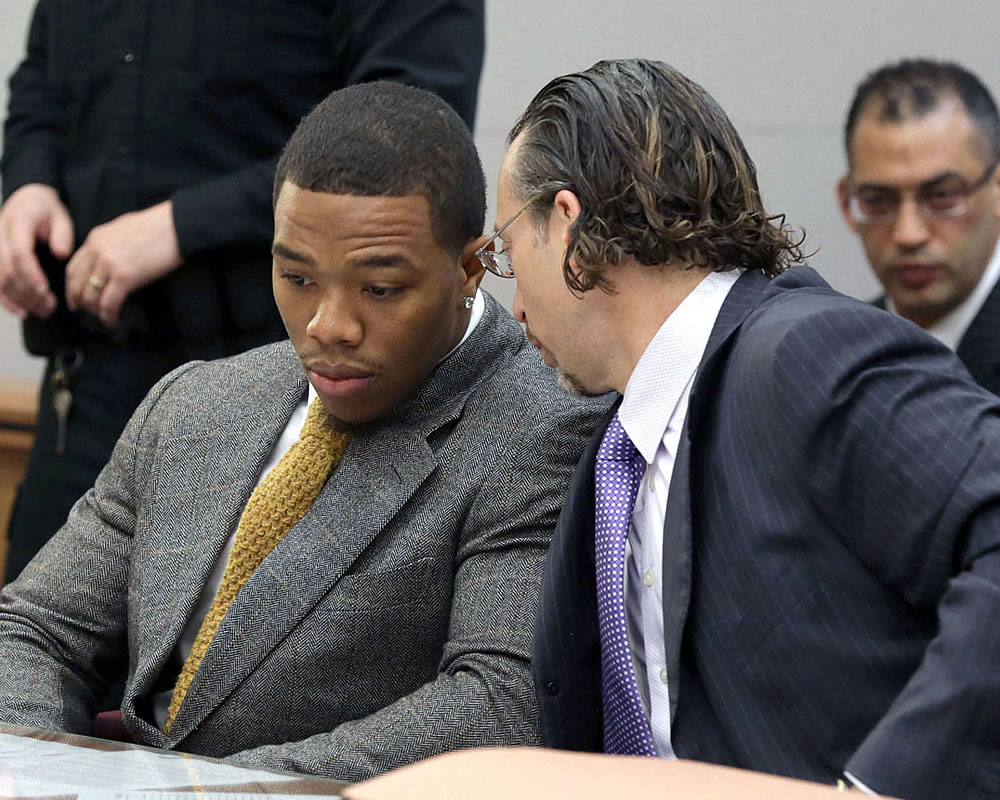
John Gallagher, founder of Gallagher Law in Philadelphia, has been indicted in federal court alongside other executives associated with aerospace startup Theia Group Inc. The indictment alleges involvement in a scheme where Theia falsely claimed plans to launch over 100 satellites for global surveillance, raising more than $250 million through fraudulent means. Gallagher, who served on Theia's board and as an executive vice president, is specifically accused of aiding founder Erlend Olson in financial misconduct and tax evasion activities. Gallagher, who specializes in space and satellite technology law, denies wrongdoing and intends to vigorously defend against these charges.“He [Gallagher] is a patriot, and we intend to vigorously defend his good name.”
- Michael Diamondstein
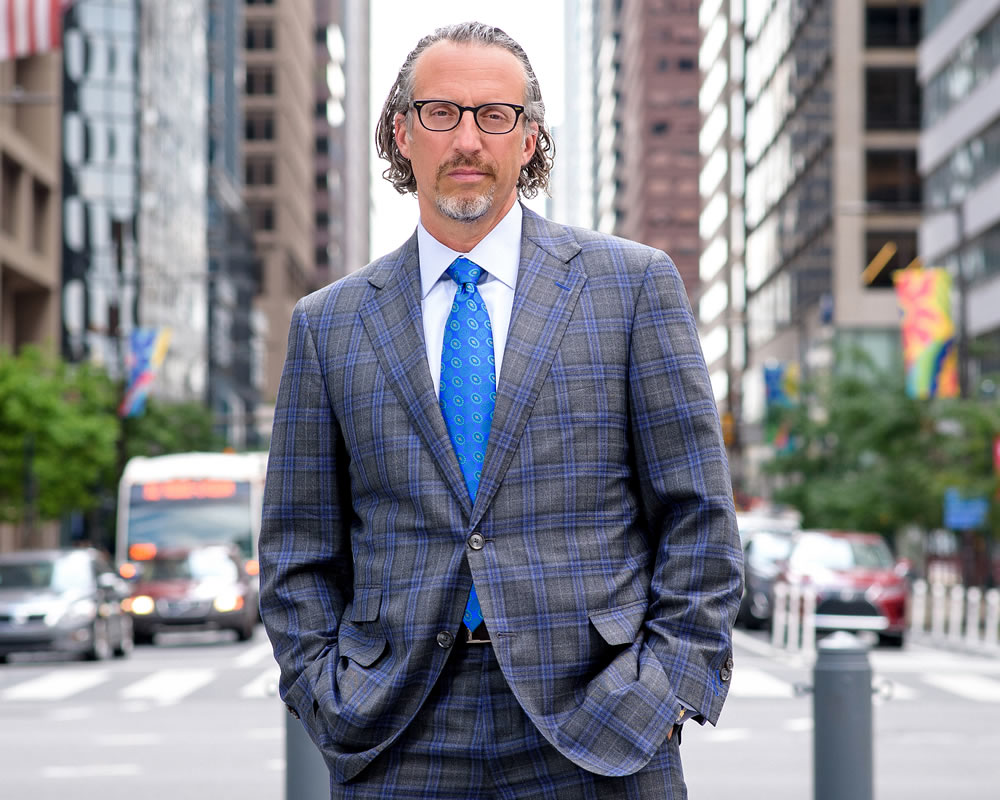
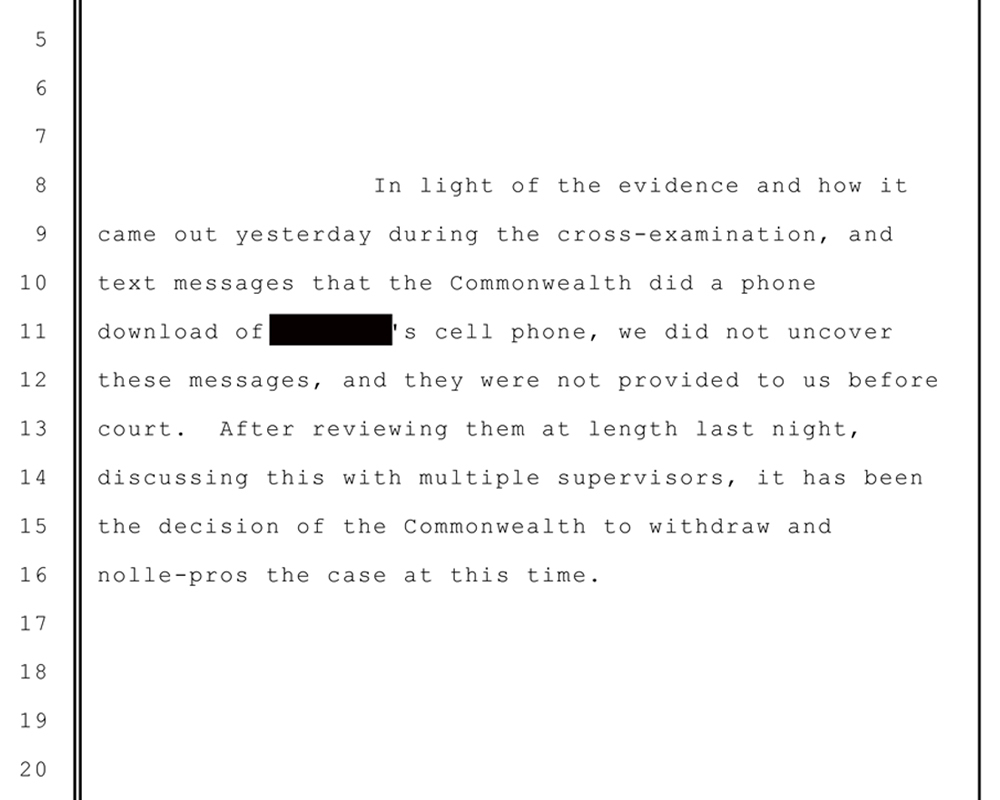
DT had spent three years in jail and was facing lifetimes more for multiple counts of child rape in Pennsylvania and Maryland. But Michael Diamondstein’s thorough investigation and strategic cross-examination forced prosecutors to withdraw their case mid-jury trial.“Michael Diamondstein is the best lawyer on Earth. He saved my life.”
- DT
Mark Young had been serving a life sentence for what prosecutors say was his role as a coconspirator in a 1974 bar robbery that ended in the shooting death of a patron. The 67-year-old Young, who maintained his innocence for almost 50 years, is now slated to be released from prison after a negotiated guilty plea. The judge vacated Young’s previous conviction and sentence.“The district attorney recognized the inequities in the case and we are thankful for the compassion and justice they decided was appropriate.”
- Michael Diamondstein
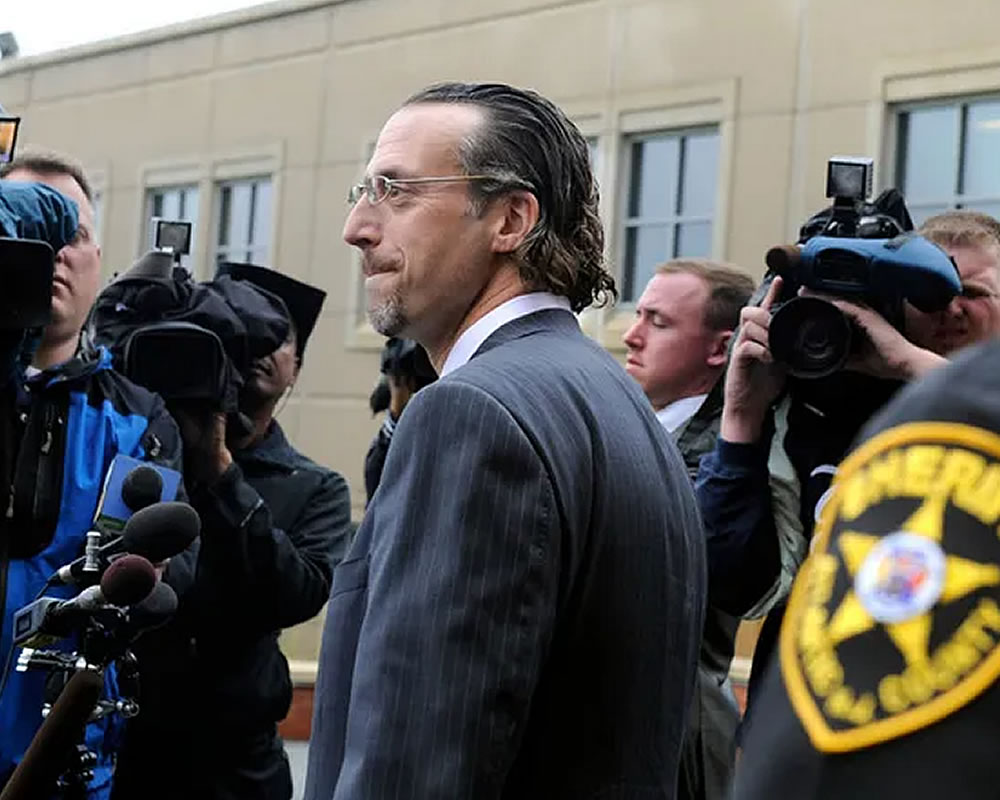
Willie Stokes's release comes after the U.S. District Court for the Eastern District of Pennsylvania vacated his murder conviction, concluding that the state violated Stokes's constitutional rights by "withholding" crucial evidence about the false testimony of a key witness in the case, according to court documents.He took his first free breaths this afternoon after almost 40 years, and he is very happy and humbled.
- Michael J. Diamondstein
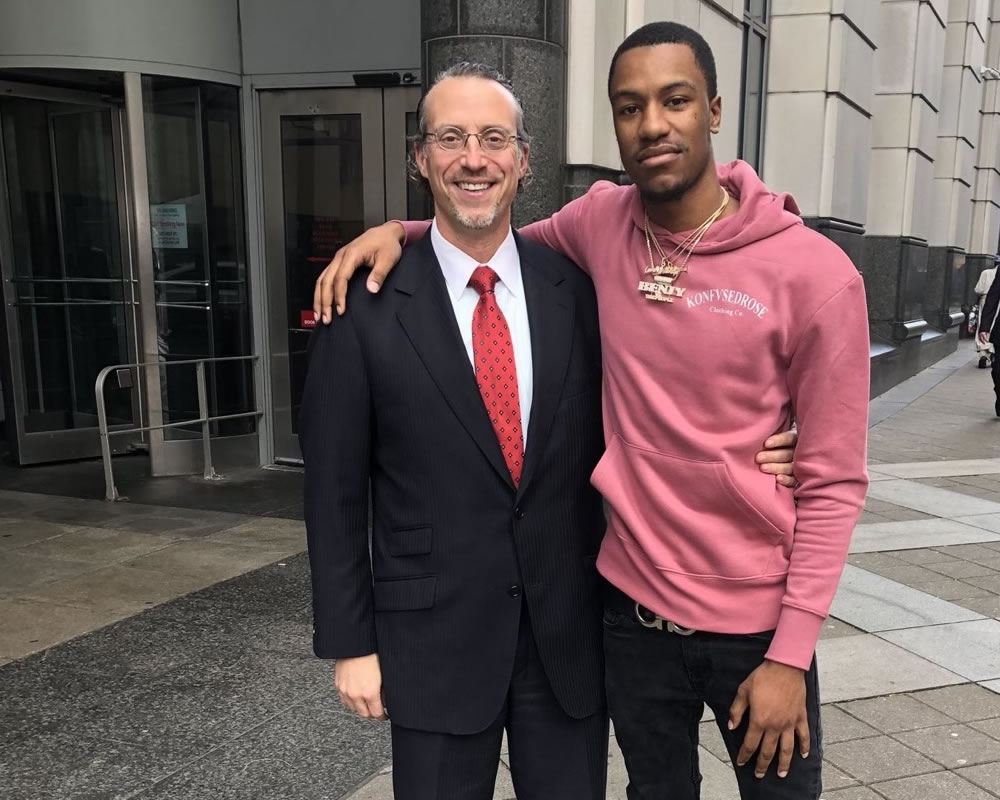
Despite that fact that multiple videos showed local rap singer, Monte Small Atwell aka Benjy killing the decedent, a Philadelphia jury found Mr. Atwell Not Guilty of Murder. The video clearly showed that the unarmed decedent was chasing Mr. Atwell. Mr. Atwell’s attorney, Michael Diamondstein litigated a very effective self-defense case. After a number of withering cross examinations and a closing wherein Mr. Diamondstein exhorted the jurors that his client “would rather be judged by 12 than carried by 6” the jury agreed that Mr. Atwell’s actions were justified.Mr. Diamondstein saved my life. He is the best there is.
- Monte Small Atwell aka Benjy
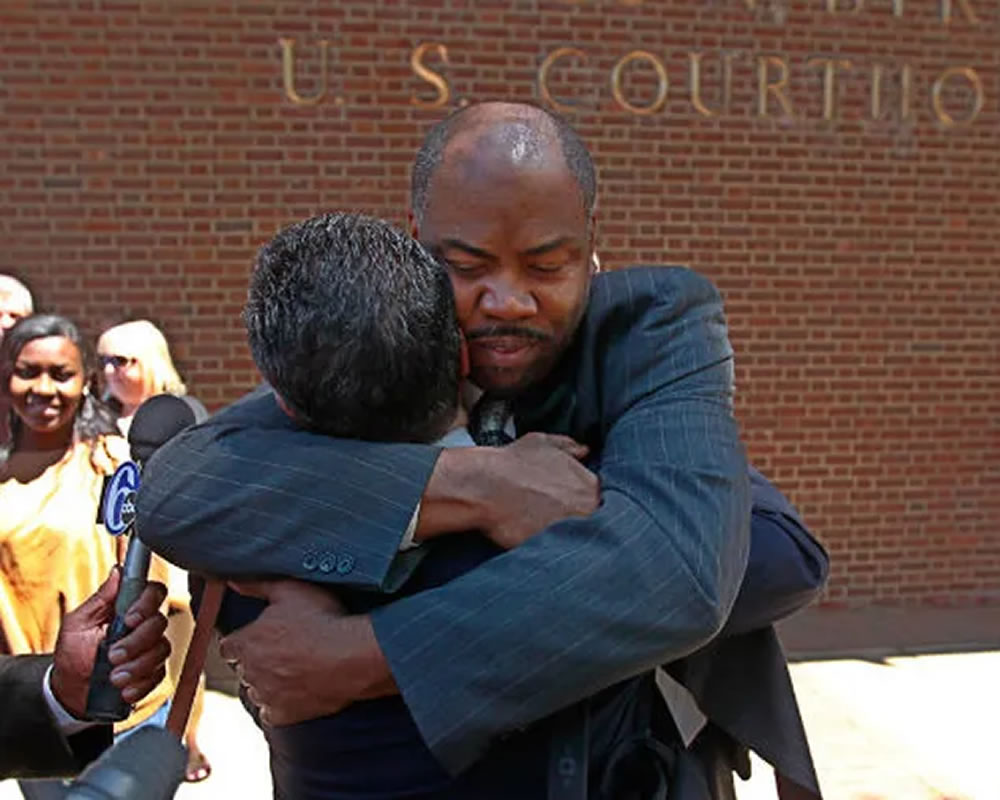
Six members of an elite Philadelphia narcotics squad were acquitted of federal corruption charges – a verdict the men described as “vindication” after nearly a decade of federal scrutiny surrounding their conduct. A jury of six men and six women took 5 1/2 days to reject prosecutors’ arguments that former Officers Thomas Liciardello, Brian Reynolds, Michael Spicer, Perry Betts, Linwood Norman, and John Speiser routinely beat and robbed drug suspects during their time as members of the Narcotics Field Unit.The things that were said about these honorable men and police officers over the last eight to 10 months were ridiculous. A lot of people in this city owe these heroes an apology.
- Michael J. Diamondstein
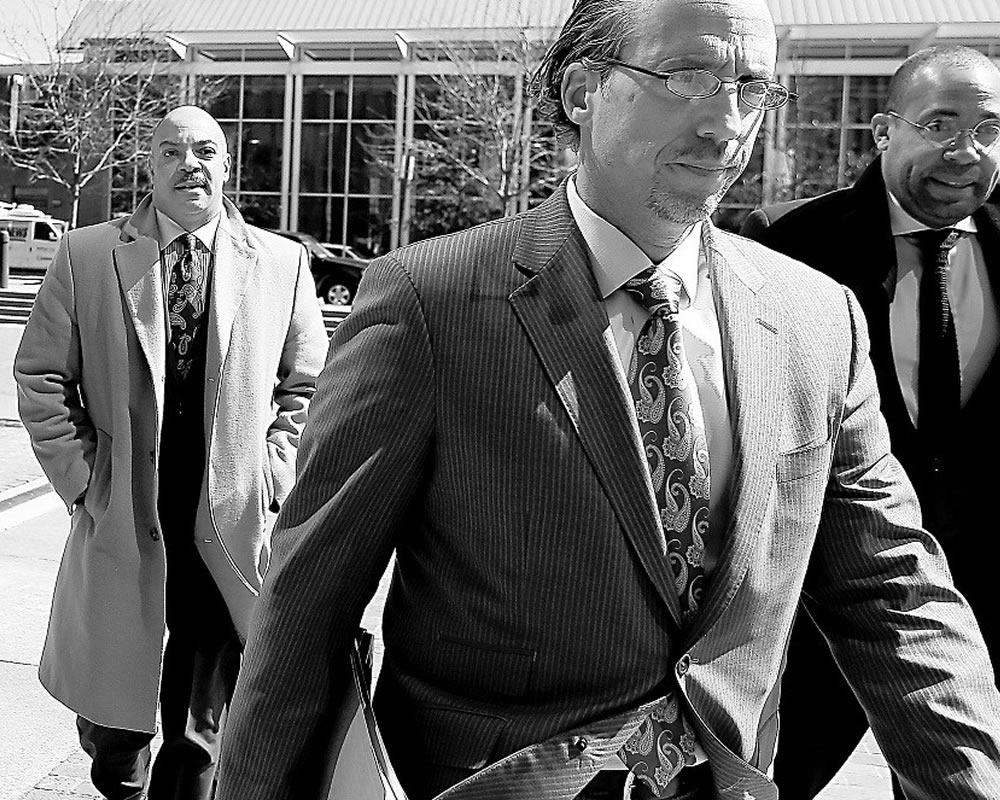
Philadelphia District Attorney Seth Williams pleaded not guilty to 23 counts of fraud, extortion, and bribery-related charges. But the problems of the city’s cash-strapped top prosecutor continued to mount outside the courtroom, a day after federal authorities accused him of repeatedly selling his influence to wealthy benefactors willing to bankroll his luxury tastes.This indictment is 24 hours old and yet too many politicians and commentators have already tried and convicted Seth Williams in the media. Simply because the government makes explosive allegations in a complaint doesn’t mean they’re going to prove it in a court of law.
- Michael J. Diamondstein
It's 8:00 on a September morning but Michael Diamonstein has already been in his office for hours. A criminal defense lawyer, Diamondstein likes to be prepared before he goes to court. That preparation paid off to get an innocent man cleared of all charges.The man gave me my life back.
- Yusef Bey
With evidence missing and the investigation tainted by the involvement of a detective who pleaded guilty to impeding justice, the District Attorney’s Office has withdrawn murder charges against a 28-year-old man, Dante Hill, in a 2011 shooting outside a North Philadelphia sports bar.Tremendous day, not only for Mr. Hill but for the entire Philadelphia justice system.
- Michael J. Diamondstein
Michael Diamondstein argued the original jail sentence is illegal because the previous judge assigned the case failed to address if Risoldi was eligible for re-entry, which would allow her to be released from jail early.Diamondstein added that Berks County Senior Judge Stephen Lieberman, who is now overseeing the case, has authority to reconsider the sentence made by the previous judge, who retired last year.