
Although the central questions in the cases differ slightly, both could provide guidance to attorneys on lingering questions about a person’s reasonable expectation of privacy in their cellphone location data, and the level of court scrutiny that must be sought by prosecutors in order to obtain that information.
What does it take for prosecutors to properly obtain warrants to track a suspect’s real-time cellphone movements?
That’s the question Pennsylvania’s Supreme Court is set to consider in two cases—captioned Commonwealth v. Pacheco and Commonwealth v. Dunkins—both of which the justices this week slated for oral arguments.
Although the central questions in the cases differ slightly, both could provide guidance to attorneys on lingering questions about a person’s reasonable expectation of privacy in their cellphone location data, and the level of court scrutiny that must be sought by prosecutors in order to obtain that information.
The specific question in Pachecho is whether prosecutors may properly be allowed to track a suspect’s cellphone location based on orders obtained under the Pennsylvania’s Wiretap Act. David Pacheco, who was subsequently arrested and charged with drug offenses, says a 2018 U.S. Supreme Court opinion demands more. The Montgomery County Court of Common Pleas gave prosecutors the order they sought under the Wiretap Act, but Pacheco’s case argues that the wiretap order does not offer protections similar to a criminal search warrant.
In Dunkins, the justices are set to review whether the Pennsylvania Superior Court erred when it ruled earlier this year that law enforcement did not need a warrant to obtain evidence that a defendant’s cellphone had been logged on to a campus’ wireless network at the time an assault and robbery took place in a nearby dorm.
According to the Superior Court’s Feb. 12 precedential opinion, campus police had Moravian College’s director of systems engineering compile a list of all the users who logged on to the campus’ wireless access point near the dorm where the incident occurred. They discovered that, at the time of the robbery, there were only three individuals logged onto the campus Wi-Fi at that location that did not live in that building—two were female and the third was Alkiohn Dunkins, whose cellphone was set to automatically connect to the network whenever it was within range.
Dunkins claimed the campus police conducted an illegal search and invaded his privacy by tracking his physical movements through cell site location information (CSLI). But Judge Correale Stevens, writing for the Superior Court panel, said there were significant differences between CSLI and Wi-Fi data.
“Whereas CSLI tracks an individual’s movements at all times of the day regardless of where he travels, the Wi-Fi data in this case is only collected when an individual logs onto the campus wireless network and is present on the Moravian campus,” Stephens said.
Dunkins’ attorney Michael Diamondstein in Philadelphia said he was thankful the Supreme Court decided to review the ruling.
“Allowing the government to track an individual citizen without court intervention should be scary to everyone,” he said. “We’re hopeful that the court will recognize that before law enforcement can geotrack individuals the appropriate court process is undertaken.”
Rebecca Kulik of the Northampton County District Attorney’s Office, which is prosecuting Dunkins, did not return a call seeking comment.
One month before that ruling, another Superior Court panel had held similarly in Pacheco, finding that prosecutors in that case had obtained constitutionally sound warrants before tracking Pacheco’s cellphone data. That decision affirmed the lower court’s order denying Pacheco’s suppression motion and upheld Pacheco’s conviction for possession with intent to deliver.
According to Superior Court Judge Deborah Kunselman, who wrote the court’s unanimous decision, prosecutors conducted a constitutional search, and the Wiretap orders they obtained did not suffer from the same deficiencies the U.S. Supreme Court dealt with in its 2018 decision in United States v. Carpenter.
“These orders, when read in their totality, indicate that the court found probable cause that the information obtained would lead to evidence that Pacheco was violating specific provisions of the crimes code and would enable law enforcement to track and locate him through his cellphone,” Kunselman said. ”The warrants issued here under the Pennsylvania Wiretap Act differ substantially from the ‘D orders’ issued under the federal Stored Communications Act in Carpenter.”
In appealing his case, Dunkins had also cited the Carpenter decision.
Pacheco’s counsel, John I. McMahon Jr. and Brooks Thompson of McMahon, Lentz & Thompson, said a ruling from the justices could provide guidance about the different standards for obtaining warrants under the state and federal constitution versus obtaining search orders for real-time cellphone information under the Wiretap Act, which, Pacheco’s lawyers argue, is a much broader standard.
“To get a warrant, you need to show the area to be searched will lead to evidence on a crime,” Thompson said. Under the Wiretap Act there is probable cause if there is reason to believe “information relevant to an ongoing criminal investigation will be obtained. That includes a lot more than evidence of a crime. … Anything could be relevant.”
Both attorneys noted that an earlier decision by the three-judge panel had found in Pacheco’s favor on the discrepancies in the constitutional versus Wiretap Act standards, but that decision was withdrawn on reconsideration.
“A decision favorable to us by the Pennsylvania Supreme Court will have dramatic ramifications throughout Pennsylvania,” McMahon said.
A spokeswoman for the Montgomery County DA’s Office declined to comment.
According to Kunselman, in 2015, the Montgomery County District Attorney’s Office came to believe that Pacheco, a Norristown resident, was part of a Mexican drug cartel, smuggling heroin into the United States. Over their nearly year-long investigation, prosecutors obtained several orders under the Wiretap Act, including “ping” requests that authorized the phone company to send signals to Pacheco’s phone as directed by law enforcement. The signals gave real-time indications of Pacheco’s location.
After obtaining more details about Pacheco’s involvement in the heroin distribution scheme, police arrested Pacheco and charged him with multiple counts of PWID, among other things.
Before trial, Pacheco tried to suppress the cellphone information, but the court denied that request. A jury subsequently convicted him on nearly all the charges he faced.
Pacheco appealed the suppression motion denial, citing the U.S. Supreme Court’s ruling in Carpenter, which determined that people have a legitimate expectation of privacy in their movements recorded through cellphone location information and that the third-party doctrine does not apply, since a person is not voluntarily “sharing” his or her information in the usual sense of that word. The high court also found that the government generally needs to obtain a warrant supported through probable cause to obtain that type of information.
Kunselman agreed with Pacheco that Carpenter, which deals with historical location information, applies to real-time location information, but she disagreed with Pacheco’s argument that the Wiretap orders were insufficient and should not be considered a “warrant” under the law.
Kunselman said there were few Pennsylvania appellate cases on the matter, and none provided clear guidance, but, looking to U.S. Supreme Court considerations, she determined that the Wiretap orders met all the requirements for a proper warrant, since, among other things, the person was identified, the offenses were identified, the place—which Kunselman noted was Pacheco’s cellphone—was identified, and so were the items to be seized—which Kunselman said was the real-time location data.
“Unlike the Pennsylvania Wiretap Act, the federal statute did not require, and the government did not provide, an affidavit of probable cause individualized to Carpenter and his suspected crimes for the issuance of the ‘D orders,’” she said. “Again, in the high court’s opinion, the showing of reasonable grounds fell ‘well short of the probable cause required for a warrant,” noting that “the court usually requires some quantum of individualized suspicion before a search or seizure may take place.’”
See what the local and national media are saying about Michael Diamondstein and his cases.
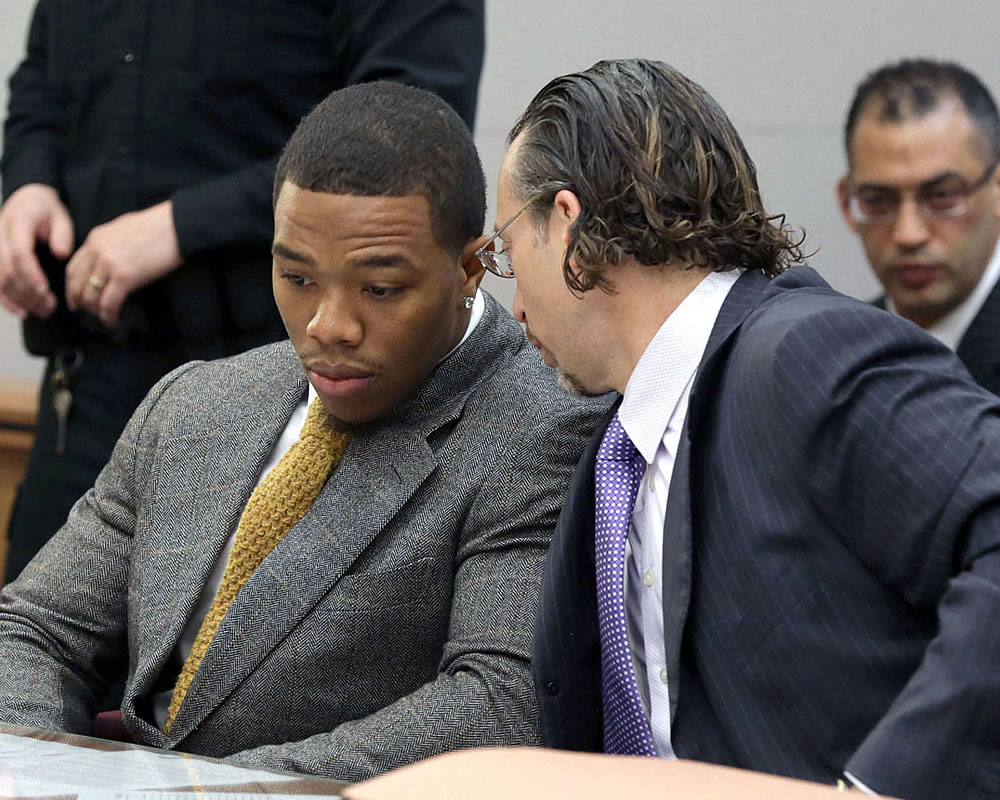
Baltimore Ravens running back Ray Rice will be allowed to enter a program to avoid prosecution in an alleged assault of his now-wife. Upon successful completion of the program — which will be a minimum of one year — the third-degree charge of aggravated assault causing serious bodily injury would be dismissed. The arrest would remain on his record, but with no conviction.We were concerned that Mr. Rice would be treated more harshly because of his celebrity status. We are thankful that he was not. We are thankful that he was given the same treatment as anyone else in a similar situation.
- Michael J. Diamondstein
John Gallagher, founder of Gallagher Law in Philadelphia, has been indicted in federal court alongside other executives associated with aerospace startup Theia Group Inc. The indictment alleges involvement in a scheme where Theia falsely claimed plans to launch over 100 satellites for global surveillance, raising more than $250 million through fraudulent means. Gallagher, who served on Theia's board and as an executive vice president, is specifically accused of aiding founder Erlend Olson in financial misconduct and tax evasion activities. Gallagher, who specializes in space and satellite technology law, denies wrongdoing and intends to vigorously defend against these charges.“He [Gallagher] is a patriot, and we intend to vigorously defend his good name.”
- Michael Diamondstein

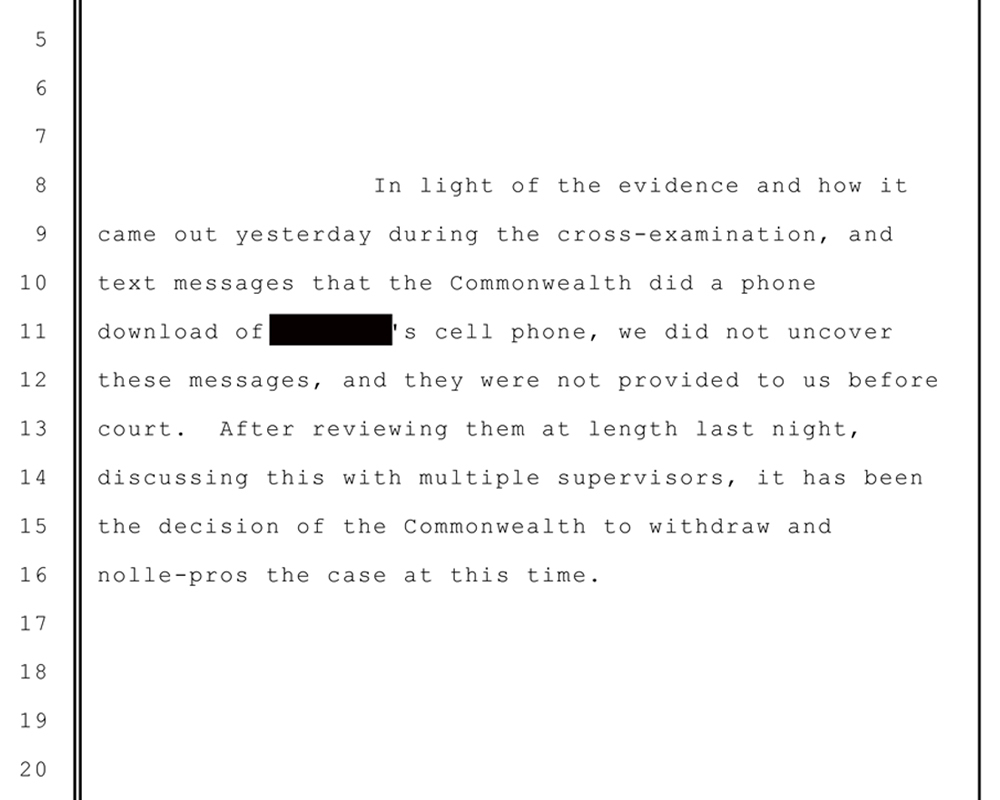
DT had spent three years in jail and was facing lifetimes more for multiple counts of child rape in Pennsylvania and Maryland. But Michael Diamondstein’s thorough investigation and strategic cross-examination forced prosecutors to withdraw their case mid-jury trial.“Michael Diamondstein is the best lawyer on Earth. He saved my life.”
- DT
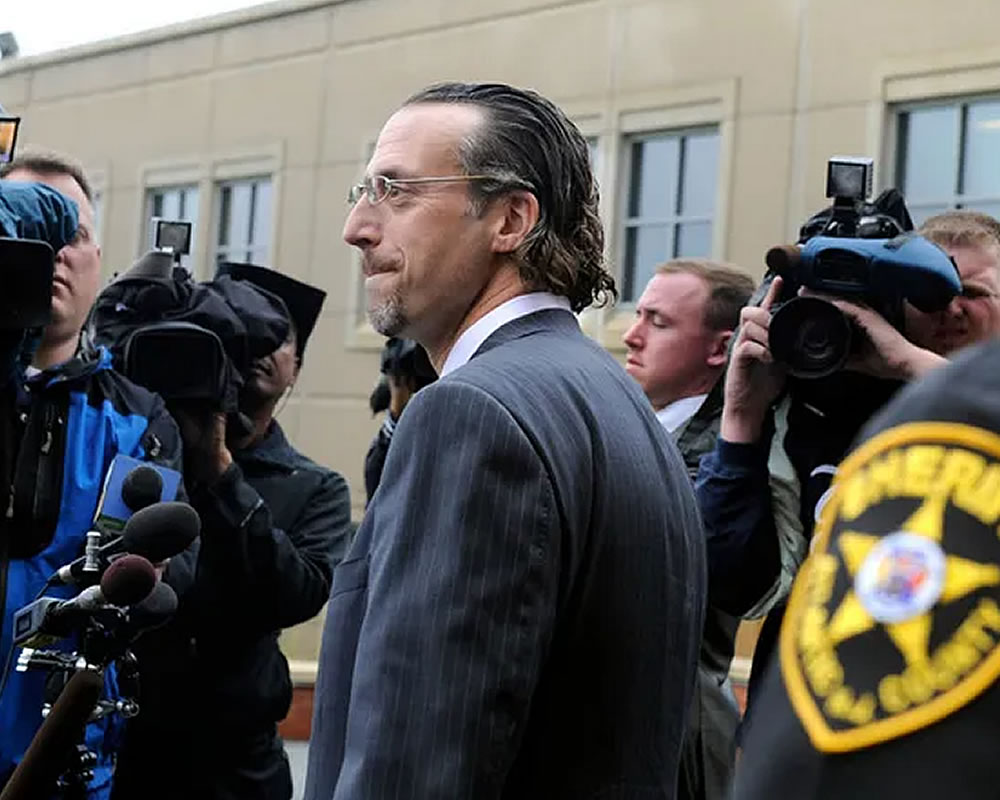
Mark Young had been serving a life sentence for what prosecutors say was his role as a coconspirator in a 1974 bar robbery that ended in the shooting death of a patron. The 67-year-old Young, who maintained his innocence for almost 50 years, is now slated to be released from prison after a negotiated guilty plea. The judge vacated Young’s previous conviction and sentence.“The district attorney recognized the inequities in the case and we are thankful for the compassion and justice they decided was appropriate.”
- Michael Diamondstein
Willie Stokes's release comes after the U.S. District Court for the Eastern District of Pennsylvania vacated his murder conviction, concluding that the state violated Stokes's constitutional rights by "withholding" crucial evidence about the false testimony of a key witness in the case, according to court documents.He took his first free breaths this afternoon after almost 40 years, and he is very happy and humbled.
- Michael J. Diamondstein
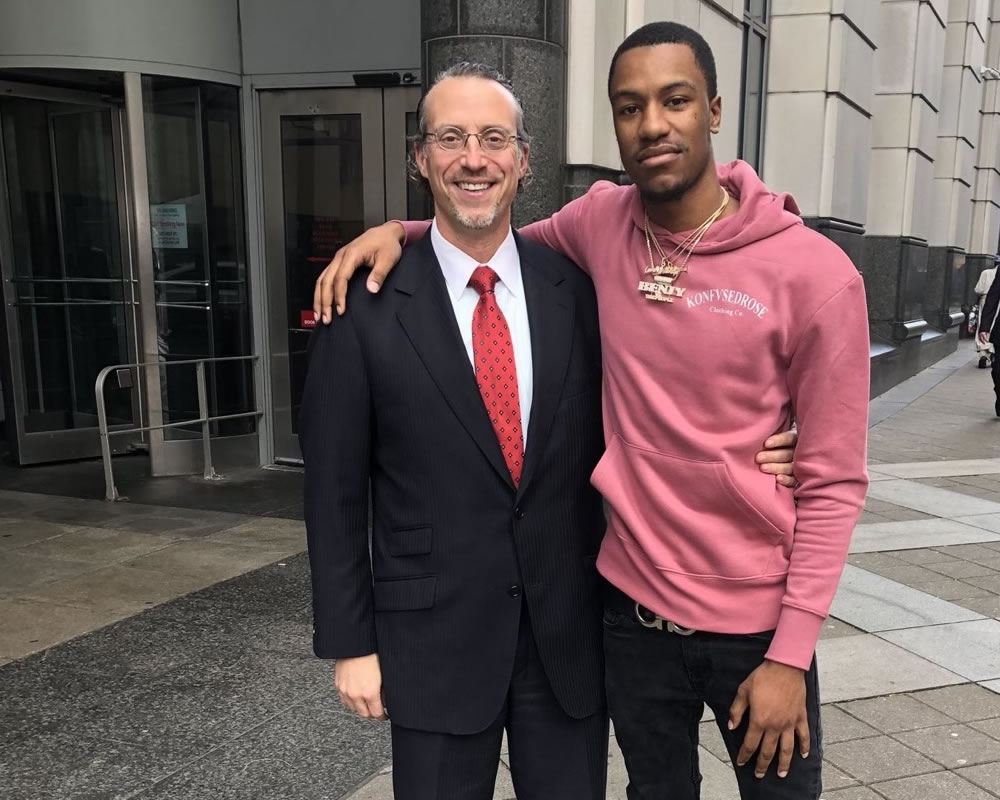
Despite that fact that multiple videos showed local rap singer, Monte Small Atwell aka Benjy killing the decedent, a Philadelphia jury found Mr. Atwell Not Guilty of Murder. The video clearly showed that the unarmed decedent was chasing Mr. Atwell. Mr. Atwell’s attorney, Michael Diamondstein litigated a very effective self-defense case. After a number of withering cross examinations and a closing wherein Mr. Diamondstein exhorted the jurors that his client “would rather be judged by 12 than carried by 6” the jury agreed that Mr. Atwell’s actions were justified.Mr. Diamondstein saved my life. He is the best there is.
- Monte Small Atwell aka Benjy
Six members of an elite Philadelphia narcotics squad were acquitted of federal corruption charges – a verdict the men described as “vindication” after nearly a decade of federal scrutiny surrounding their conduct. A jury of six men and six women took 5 1/2 days to reject prosecutors’ arguments that former Officers Thomas Liciardello, Brian Reynolds, Michael Spicer, Perry Betts, Linwood Norman, and John Speiser routinely beat and robbed drug suspects during their time as members of the Narcotics Field Unit.The things that were said about these honorable men and police officers over the last eight to 10 months were ridiculous. A lot of people in this city owe these heroes an apology.
- Michael J. Diamondstein
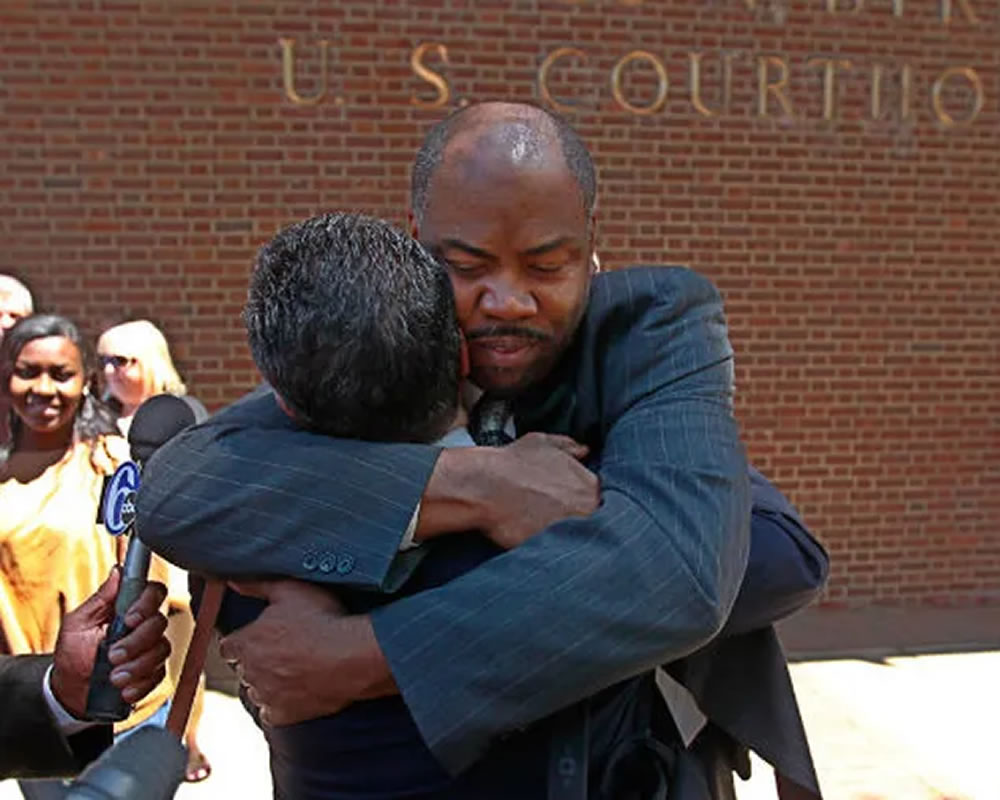
Philadelphia District Attorney Seth Williams pleaded not guilty to 23 counts of fraud, extortion, and bribery-related charges. But the problems of the city’s cash-strapped top prosecutor continued to mount outside the courtroom, a day after federal authorities accused him of repeatedly selling his influence to wealthy benefactors willing to bankroll his luxury tastes.This indictment is 24 hours old and yet too many politicians and commentators have already tried and convicted Seth Williams in the media. Simply because the government makes explosive allegations in a complaint doesn’t mean they’re going to prove it in a court of law.
- Michael J. Diamondstein
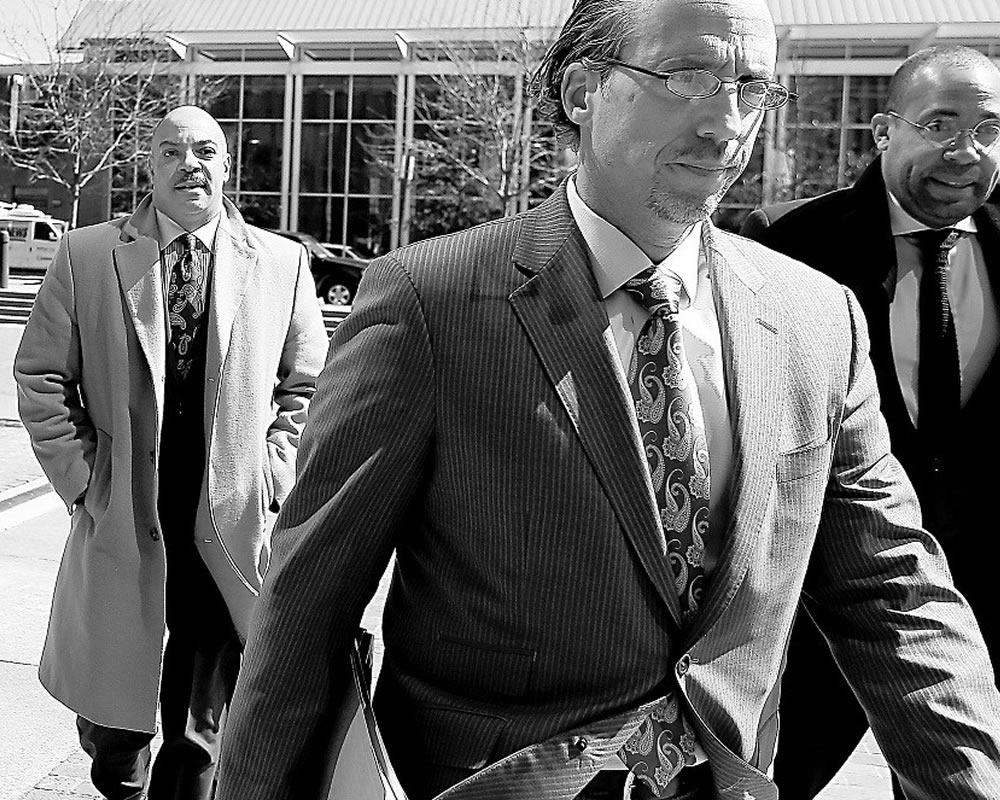
It's 8:00 on a September morning but Michael Diamonstein has already been in his office for hours. A criminal defense lawyer, Diamondstein likes to be prepared before he goes to court. That preparation paid off to get an innocent man cleared of all charges.The man gave me my life back.
- Yusef Bey
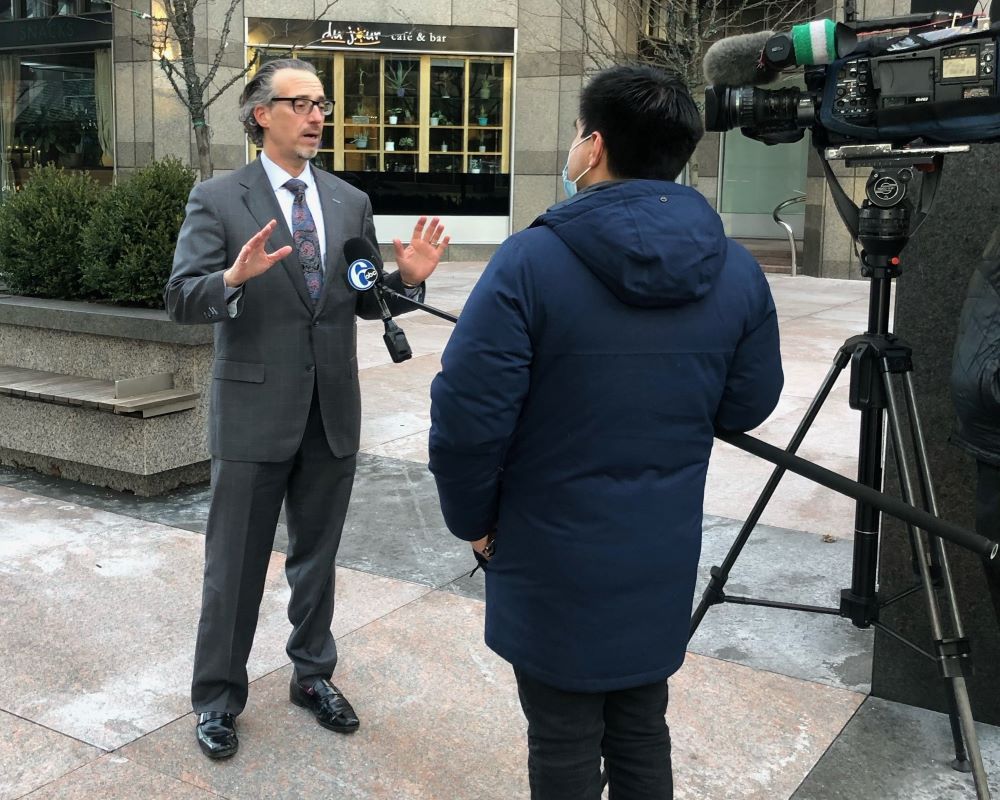
With evidence missing and the investigation tainted by the involvement of a detective who pleaded guilty to impeding justice, the District Attorney’s Office has withdrawn murder charges against a 28-year-old man, Dante Hill, in a 2011 shooting outside a North Philadelphia sports bar.Tremendous day, not only for Mr. Hill but for the entire Philadelphia justice system.
- Michael J. Diamondstein
Michael Diamondstein argued the original jail sentence is illegal because the previous judge assigned the case failed to address if Risoldi was eligible for re-entry, which would allow her to be released from jail early.Diamondstein added that Berks County Senior Judge Stephen Lieberman, who is now overseeing the case, has authority to reconsider the sentence made by the previous judge, who retired last year.