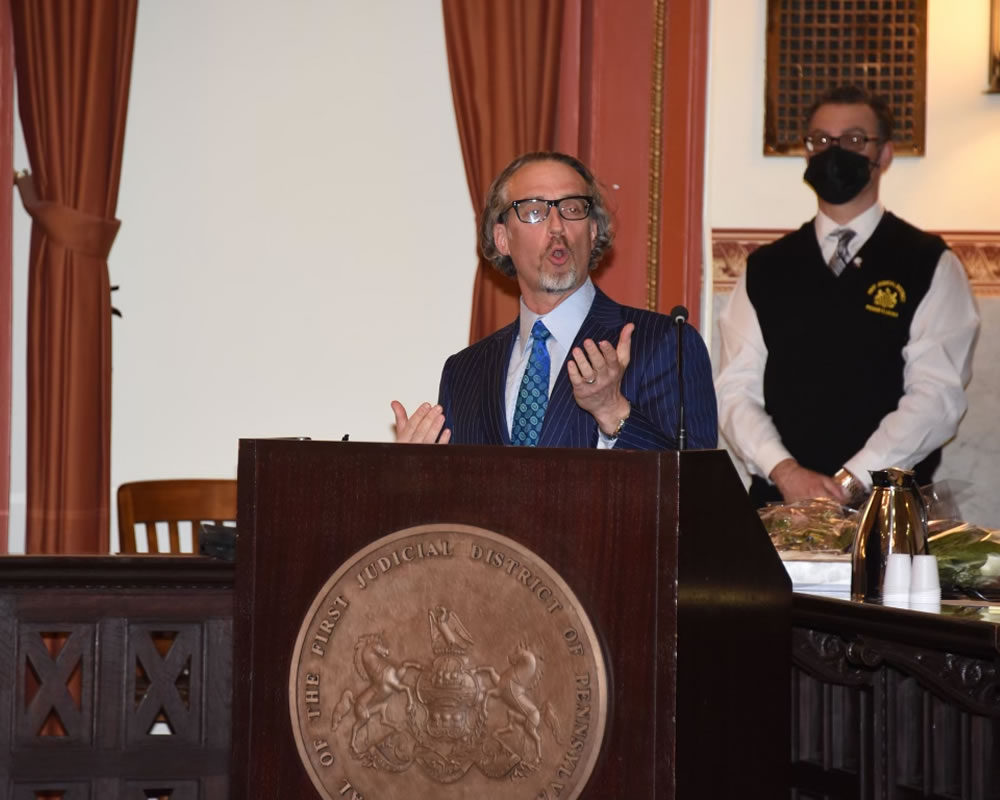
With cellphones becoming a necessary accessory of daily life, questions are growing regarding how much leeway police should have when it comes to tracking suspects through their geolocation data.
On Tuesday, the Pennsylvania Supreme Court grappled with two novel questions getting at these issues—one dealing with warrants for tracking real-time cell data, and the other focusing on the police’s ability to obtain records for Wi-Fi users on a college campus.
In both cases, Commonwealth v. Pacheco and Commonwealth v. Dunkins, defense attorneys warned about potentially “unfettered access” by law enforcement to search and obtain geolocation data from suspects.
“There needs to be some mechanism, some limit,” Brooks Thompson of McMahon, Lentz & Thompson, who is representing David Pacheco, told the justices. “When Pacheco’s clearly going about his business in Norristown, there’s nothing to stop the location monitoring at that time. They could know he’s not engaged in criminal activity at that time and [could still monitor].”
Pacheco deals with the different standards between obtaining a court order to track geolocation data under the Wiretap Act versus the need to obtain a warrant to access the information.
In Pacheco, the Montgomery County District Attorney’s Office came to believe that Pacheco, a Norristown resident, was part of a Mexican drug cartel, smuggling heroin into the United States. Over their nearly year-long investigation, prosecutors obtained several orders under the Wiretap Act, including “ping” requests that authorized the phone company to send signals to Pacheco’s phone as directed by law enforcement. The signals gave real-time indications of Pacheco’s location.
Thompson, however, argued that the court orders, which allowed law enforcement to obtain data for 60 days at a time, were far too broad and allowed police to monitor his client’s every movement regardless of whether there was probable cause to believe those particular activities were related to a crime. Although prosecutors had argued that obtaining the wiretap order was the functional equivalent of obtaining a warrant, Thompson said that was not the case, especially since the order allowed police to search for anything that could be relevant to their investigation.
Attorney Michael Diamondstein, who argued on behalf of Alkiohn Dunkins, said his client similarly faced “unbridled” intrusion by law enforcement when police obtained his location information through Wi-Fi, and argued that granting police access to large amounts of Wi-Fi data could have a “chilling effect.”
“With the flip of a switch they were able to search every one of his movements,” Diamondstein said.

Dunkins hinges on whether law enforcement needed a warrant to obtain location data when Dunkins’ cellphone had been logged on to Moravian College’s wireless network at the time an assault and robbery took place in a nearby dorm.
According to court papers, campus police had Moravian’s director of systems engineering compile a list of all the users who logged on to the campus’ wireless access point near the dorm where the incident occurred. They discovered that, at the time of the robbery, there were only three individuals logged onto the campus Wi-Fi at that location that did not live in that building—two were female and the third was Dunkins, whose cellphone was set to automatically connect to the network whenever it was within range.
Diamondstein likened the situation to the U.S. Supreme Court case Carpenter v. United States, in which the justices held that law enforcement invaded a defendant’s privacy by compelling wireless carriers to provide a record his historical cell site location information (CSLI) for a four-month period.
However, Justice David Wecht said the situation seemed more akin to police looking over security camera footage. Diamondstein disagreed with that, noting that surveillance is the primary purpose for security cameras, but surveillance is not the purpose for cellphones.
Katharine Kurnas of the Northampton County District Attorney’s Office, which is prosecuting Dunkins, argued that the search should be allowed because police had looked through a large dump of data and had not targeted a single individual. She also said Dunkins had signed away his privacy rights under the college’s handbook.
Justice Christine Donohue questioned how Dunkins could have waived his geolocation privacy rights under the handbook, but Kurnas replied that the trial court had found that geolocation data, while not specifically mentioned, would be included in the Wi-Fi data that the handbook mentioned.
Further, Kurnas argued the case was not akin to Carpenter.
“He chose to connect to the Wi-Fi when he committed an armed robbery. He could have turned Wi-Fi off, and it still would have maintained the function of the cellphone, making it different than Carpenter,” she said.
In Pacheco, some justices indicated that the language in the Wiretap Act allowing officers to obtain information any information “relevant” to an investigation could be problematic, with Wecht saying it was a “very, very wide door to drive a Mack truck through,” and Justice Kevin Dougherty saying it seemed to “water down” the probable cause requirements and could have a “chilling” effect.
However, Montgomery County Assistant District Attorney Robert Falin noted the amount of documentation the court was given to approve the order and said the Wiretap Act gives more protections to defendants than the procedures for obtaining a warrant did.
He also added that in many circumstances obtaining a warrant would render geolocating investigative tools useless for officers, specifically arguing that the requirement to serve warrants would have given Pacheco notice his cell data was being tracked.
“This is not unfettered. It’s supervised,” Falin said. “Supervised at a level a warrant would not be.”
See what the local and national media are saying about Michael Diamondstein and his cases.
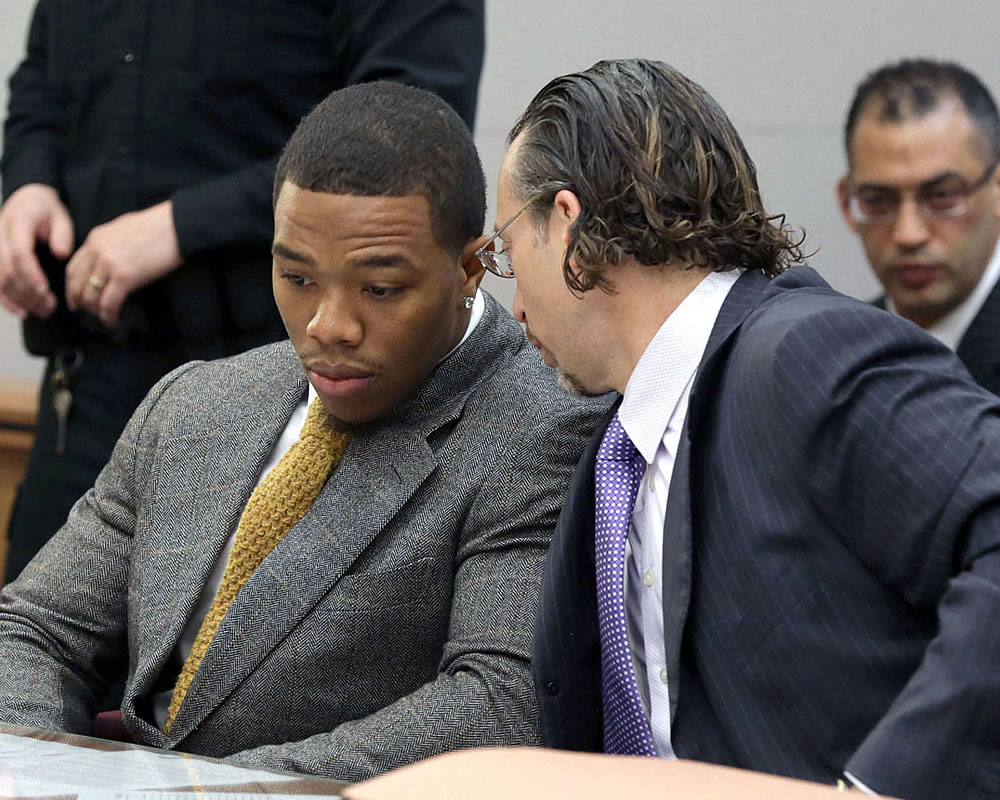
Baltimore Ravens running back Ray Rice will be allowed to enter a program to avoid prosecution in an alleged assault of his now-wife. Upon successful completion of the program — which will be a minimum of one year — the third-degree charge of aggravated assault causing serious bodily injury would be dismissed. The arrest would remain on his record, but with no conviction.We were concerned that Mr. Rice would be treated more harshly because of his celebrity status. We are thankful that he was not. We are thankful that he was given the same treatment as anyone else in a similar situation.
- Michael J. Diamondstein
John Gallagher, founder of Gallagher Law in Philadelphia, has been indicted in federal court alongside other executives associated with aerospace startup Theia Group Inc. The indictment alleges involvement in a scheme where Theia falsely claimed plans to launch over 100 satellites for global surveillance, raising more than $250 million through fraudulent means. Gallagher, who served on Theia's board and as an executive vice president, is specifically accused of aiding founder Erlend Olson in financial misconduct and tax evasion activities. Gallagher, who specializes in space and satellite technology law, denies wrongdoing and intends to vigorously defend against these charges.“He [Gallagher] is a patriot, and we intend to vigorously defend his good name.”
- Michael Diamondstein

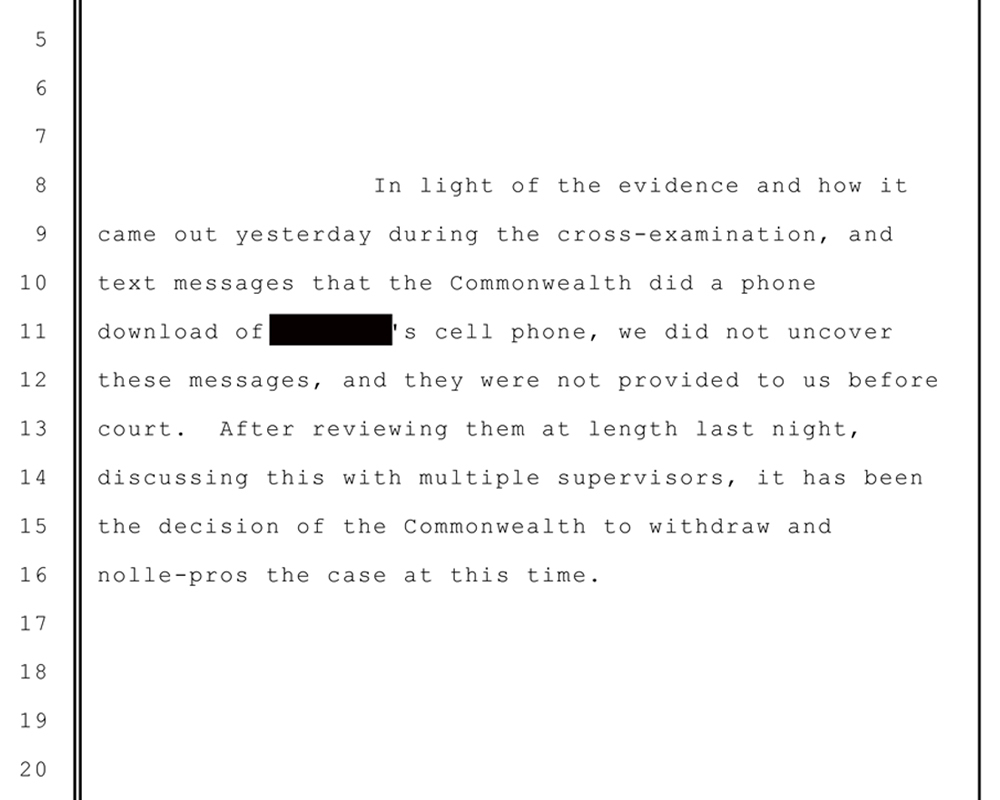
DT had spent three years in jail and was facing lifetimes more for multiple counts of child rape in Pennsylvania and Maryland. But Michael Diamondstein’s thorough investigation and strategic cross-examination forced prosecutors to withdraw their case mid-jury trial.“Michael Diamondstein is the best lawyer on Earth. He saved my life.”
- DT
Mark Young had been serving a life sentence for what prosecutors say was his role as a coconspirator in a 1974 bar robbery that ended in the shooting death of a patron. The 67-year-old Young, who maintained his innocence for almost 50 years, is now slated to be released from prison after a negotiated guilty plea. The judge vacated Young’s previous conviction and sentence.“The district attorney recognized the inequities in the case and we are thankful for the compassion and justice they decided was appropriate.”
- Michael Diamondstein
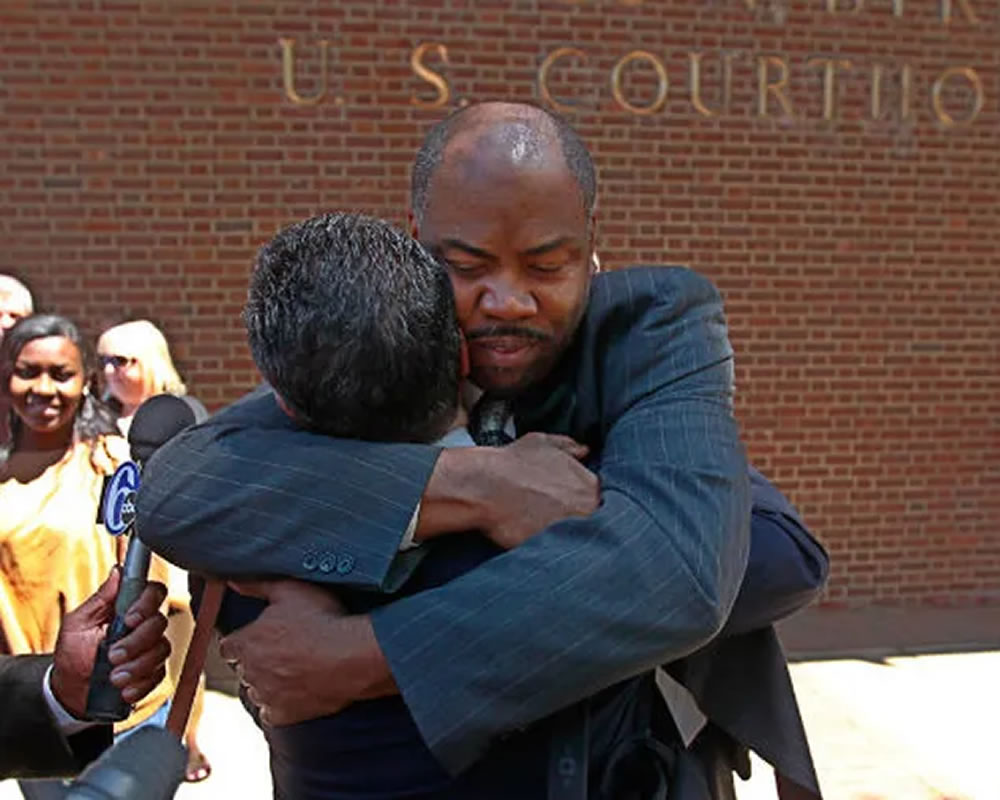
Willie Stokes's release comes after the U.S. District Court for the Eastern District of Pennsylvania vacated his murder conviction, concluding that the state violated Stokes's constitutional rights by "withholding" crucial evidence about the false testimony of a key witness in the case, according to court documents.He took his first free breaths this afternoon after almost 40 years, and he is very happy and humbled.
- Michael J. Diamondstein
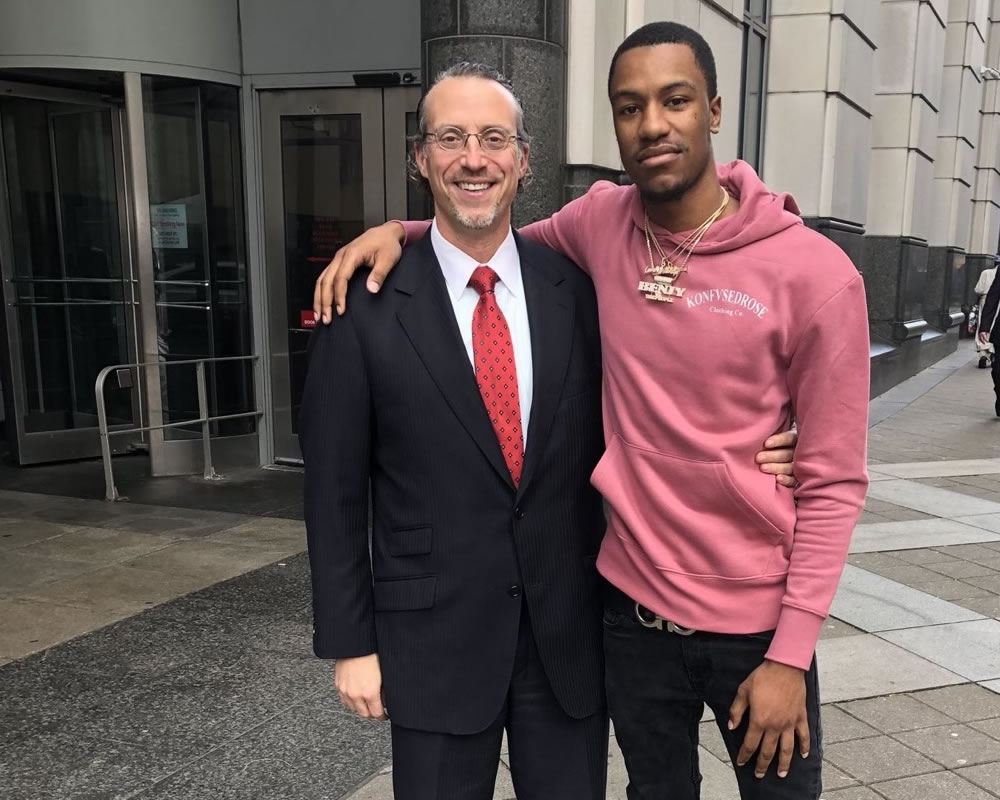
Despite that fact that multiple videos showed local rap singer, Monte Small Atwell aka Benjy killing the decedent, a Philadelphia jury found Mr. Atwell Not Guilty of Murder. The video clearly showed that the unarmed decedent was chasing Mr. Atwell. Mr. Atwell’s attorney, Michael Diamondstein litigated a very effective self-defense case. After a number of withering cross examinations and a closing wherein Mr. Diamondstein exhorted the jurors that his client “would rather be judged by 12 than carried by 6” the jury agreed that Mr. Atwell’s actions were justified.Mr. Diamondstein saved my life. He is the best there is.
- Monte Small Atwell aka Benjy
Six members of an elite Philadelphia narcotics squad were acquitted of federal corruption charges – a verdict the men described as “vindication” after nearly a decade of federal scrutiny surrounding their conduct. A jury of six men and six women took 5 1/2 days to reject prosecutors’ arguments that former Officers Thomas Liciardello, Brian Reynolds, Michael Spicer, Perry Betts, Linwood Norman, and John Speiser routinely beat and robbed drug suspects during their time as members of the Narcotics Field Unit.The things that were said about these honorable men and police officers over the last eight to 10 months were ridiculous. A lot of people in this city owe these heroes an apology.
- Michael J. Diamondstein
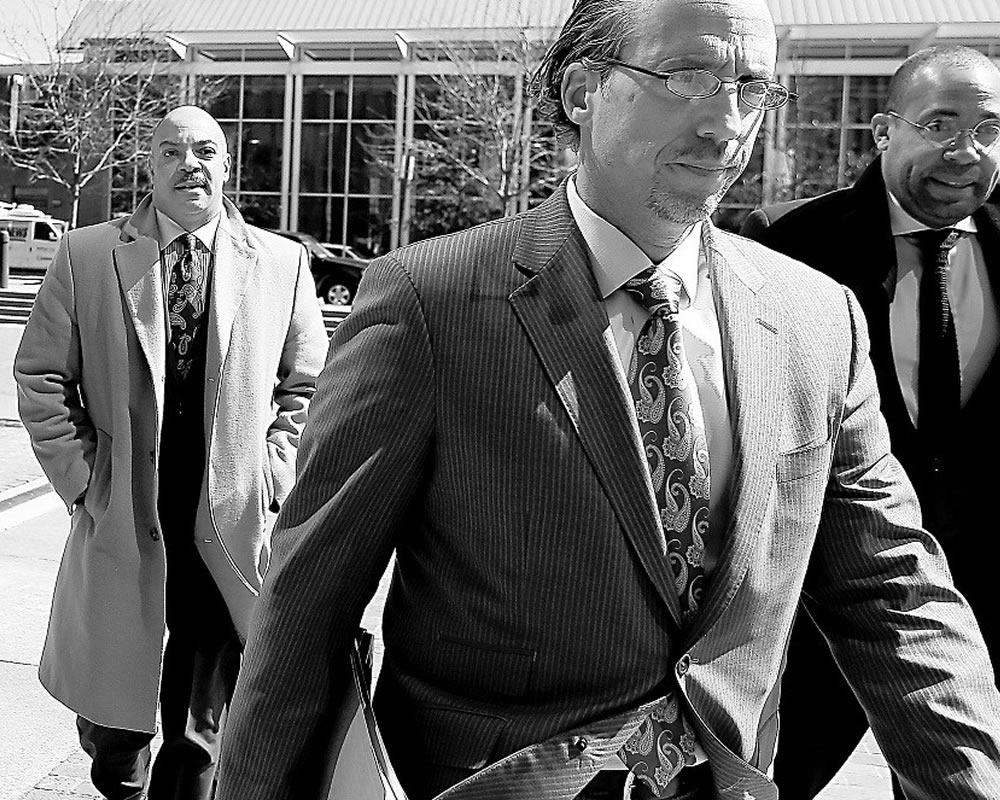
Philadelphia District Attorney Seth Williams pleaded not guilty to 23 counts of fraud, extortion, and bribery-related charges. But the problems of the city’s cash-strapped top prosecutor continued to mount outside the courtroom, a day after federal authorities accused him of repeatedly selling his influence to wealthy benefactors willing to bankroll his luxury tastes.This indictment is 24 hours old and yet too many politicians and commentators have already tried and convicted Seth Williams in the media. Simply because the government makes explosive allegations in a complaint doesn’t mean they’re going to prove it in a court of law.
- Michael J. Diamondstein
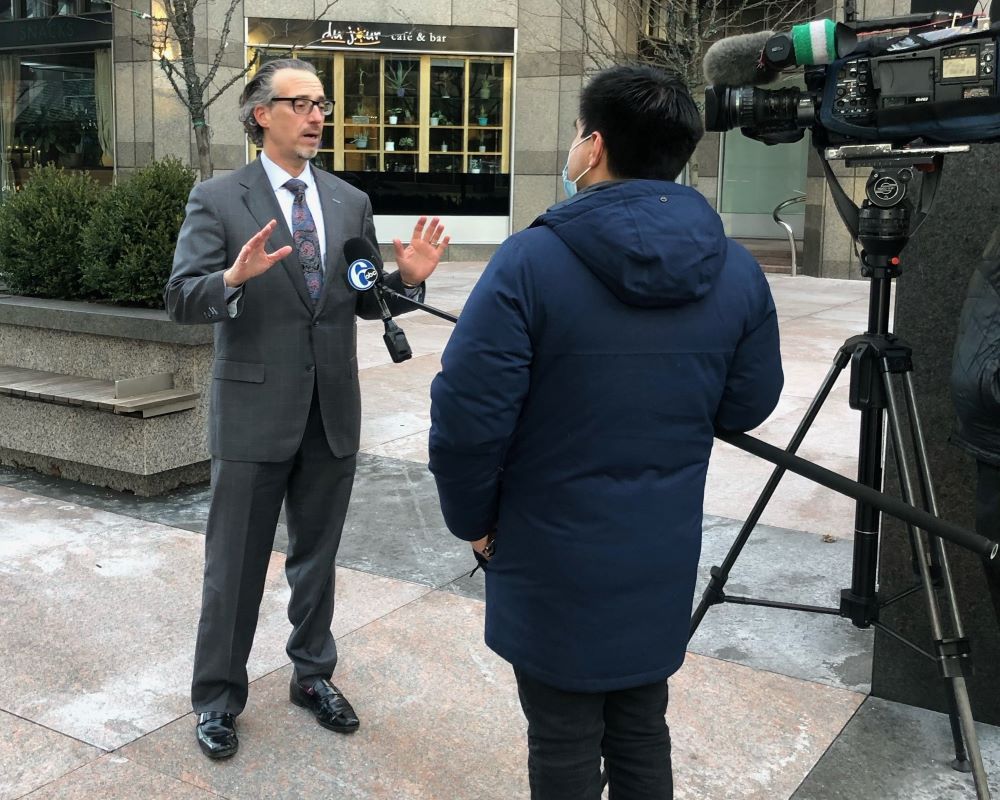
It's 8:00 on a September morning but Michael Diamonstein has already been in his office for hours. A criminal defense lawyer, Diamondstein likes to be prepared before he goes to court. That preparation paid off to get an innocent man cleared of all charges.The man gave me my life back.
- Yusef Bey
With evidence missing and the investigation tainted by the involvement of a detective who pleaded guilty to impeding justice, the District Attorney’s Office has withdrawn murder charges against a 28-year-old man, Dante Hill, in a 2011 shooting outside a North Philadelphia sports bar.Tremendous day, not only for Mr. Hill but for the entire Philadelphia justice system.
- Michael J. Diamondstein
Michael Diamondstein argued the original jail sentence is illegal because the previous judge assigned the case failed to address if Risoldi was eligible for re-entry, which would allow her to be released from jail early.Diamondstein added that Berks County Senior Judge Stephen Lieberman, who is now overseeing the case, has authority to reconsider the sentence made by the previous judge, who retired last year.